Comparative Politics
Please take 10 minutes to fill out the course evaluation forms
We have learned that there are many varieties of democracy
We can see these institutions as different ways to distribute political power
Majoritarian vs. Consensus democracies
Democratic institutions and ethnic conflict
One vision of democracy
\(\implies\) Power is concentrated within election cycles, few checks and balances
\(\implies\) Power is shared over time: if voters are dissatisfied, the opposition can win the next time
A different vision of democracy
\(\implies\) Power is dispersed within election cycles
\(\implies\) Majorities are constrained through checks and balances
TABLE 14.1 ■ Institutions and the Majoritarian-Consensus Dimension
| Institution | Majoritarian | Consensus |
|---|---|---|
| Electoral system | ? | ? |
TABLE 14.1 ■ Institutions and the Majoritarian-Consensus Dimension
| Institution | Majoritarian | Consensus |
|---|---|---|
| Electoral system | Majoritarian | Proportional |
| Party system | ? | ? |
TABLE 14.1 ■ Institutions and the Majoritarian-Consensus Dimension
| Institution | Majoritarian | Consensus |
|---|---|---|
| Electoral system | Majoritarian | Proportional |
| Party system | Two parties | Many parties |
| Government type | ? | ? |
TABLE 14.1 ■ Institutions and the Majoritarian-Consensus Dimension
| Institution | Majoritarian | Consensus |
|---|---|---|
| Electoral system | Majoritarian | Proportional |
| Party system | Two parties | Many parties |
| Government type | Single-party majority | Coalition/minority |
| Federalism | ? | ? |
TABLE 14.1 ■ Institutions and the Majoritarian-Consensus Dimension
| Institution | Majoritarian | Consensus |
|---|---|---|
| Electoral system | Majoritarian | Proportional |
| Party system | Two parties | Many parties |
| Government type | Single-party majority | Coalition/minority |
| Federalism | Unitary | Federal |
| Bicameralism | ? | ? |
TABLE 14.1 ■ Institutions and the Majoritarian-Consensus Dimension
| Institution | Majoritarian | Consensus |
|---|---|---|
| Electoral system | Majoritarian | Proportional |
| Party system | Two parties | Many parties |
| Government type | Single-party majority | Coalition/minority |
| Federalism | Unitary | Federal |
| Bicameralism | Unicameral | Bicameral |
| Constitutionalism | ? | ? |
TABLE 14.1 ■ Institutions and the Majoritarian-Consensus Dimension
| Institution | Majoritarian | Consensus |
|---|---|---|
| Electoral system | Majoritarian | Proportional |
| Party system | Two parties | Many parties |
| Government type | Single-party majority | Coalition/minority |
| Federalism | Unitary | Federal |
| Bicameralism | Unicameral | Bicameral |
| Constitutionalism | Legislative supremacy constitution | Higher law constitution |
By now, it should be clear that these visions entail trade-offs
Choosing one form over the other is a matter of ideological preferences and political culture
Ethnic conflict is tragically present in our collective memory
UN peacekeepers collecting corpses after the Ahmići massacre. Photograph provided courtesy of the ICTY (Wikimedia Commons)
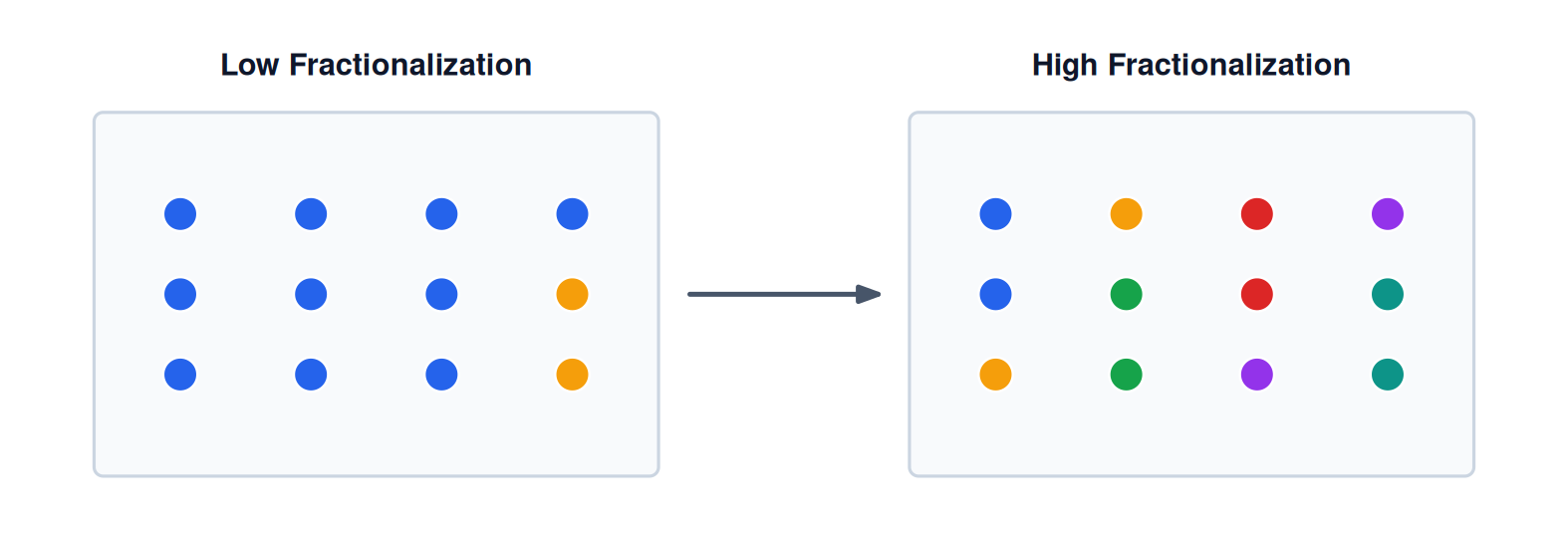
Ethnic fractionalization \(\rightarrow\) many medium/small ethnic groups

Ethnic polarization \(\rightarrow\) two large ethnic groups
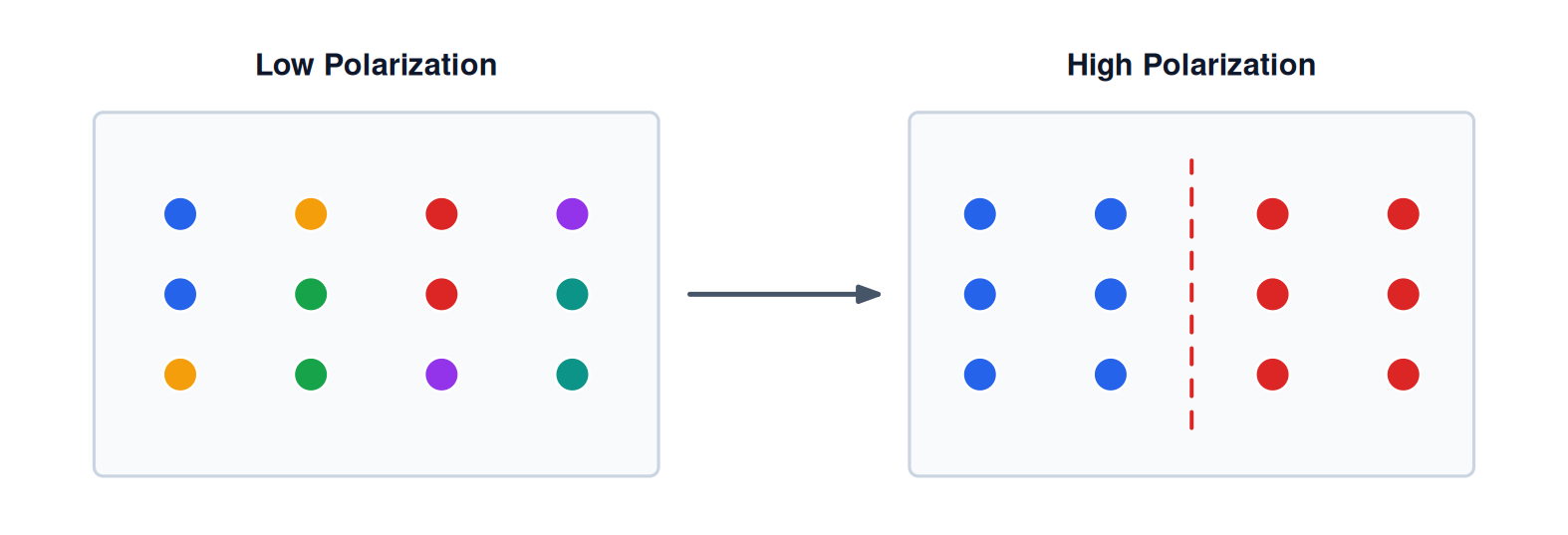
The constructivist tradition provides an important insight
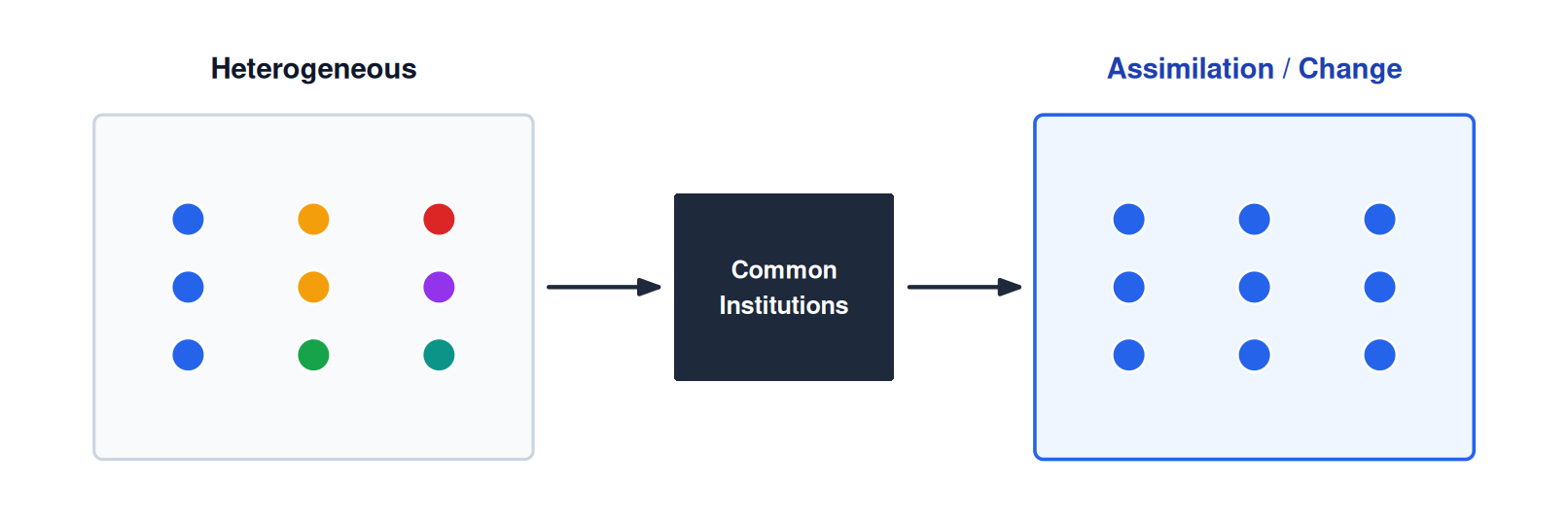
Even with a constructivist mindset, the problem remains thorny
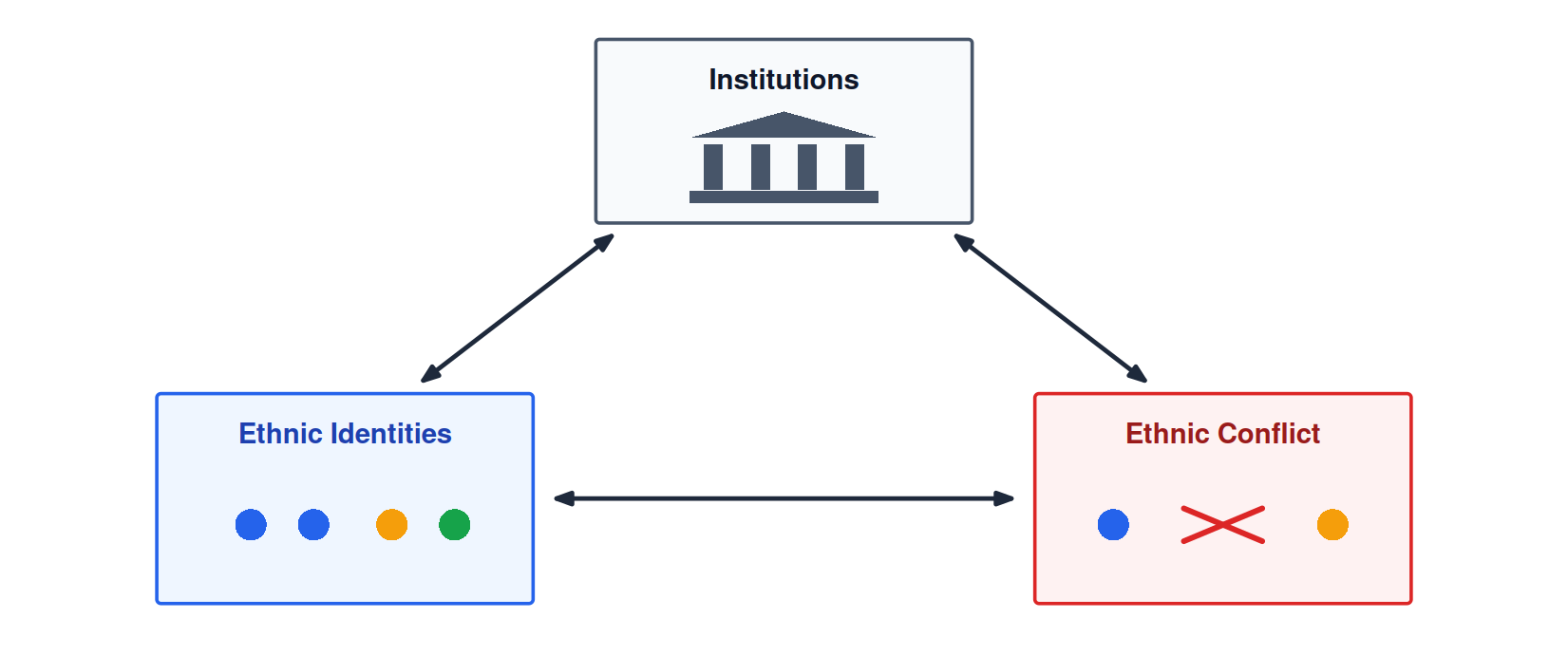
The debate on electoral laws reflects the two visions of democracy
Consociationalism (Lijphart) \(\rightarrow\) strong consensus institutions in divided societies
Criticisms of consociationalism
An alternative (Majority vision) could be Alternative Vote (Horowitz 1985)
Recall the discussion on federalism in the previous lecture
Federalism can also shift the conflict to the local level
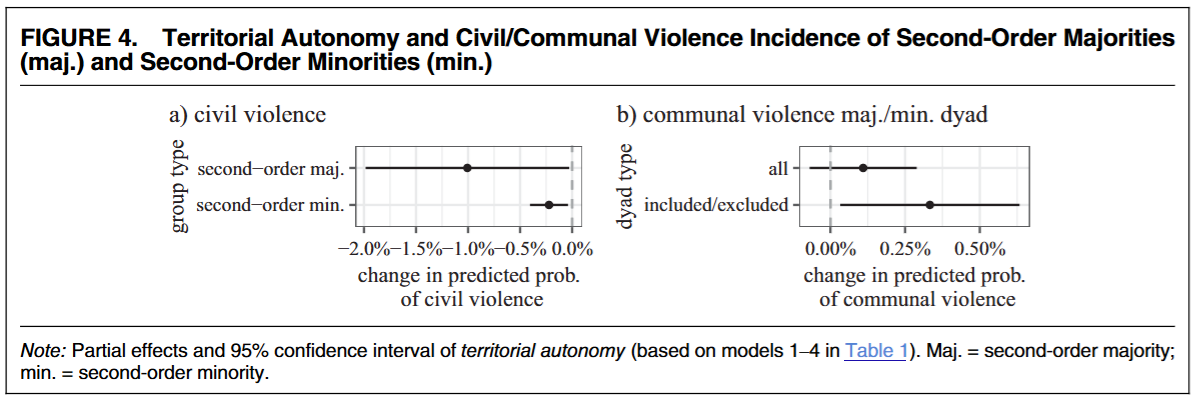
From Juon (APSR 2025)
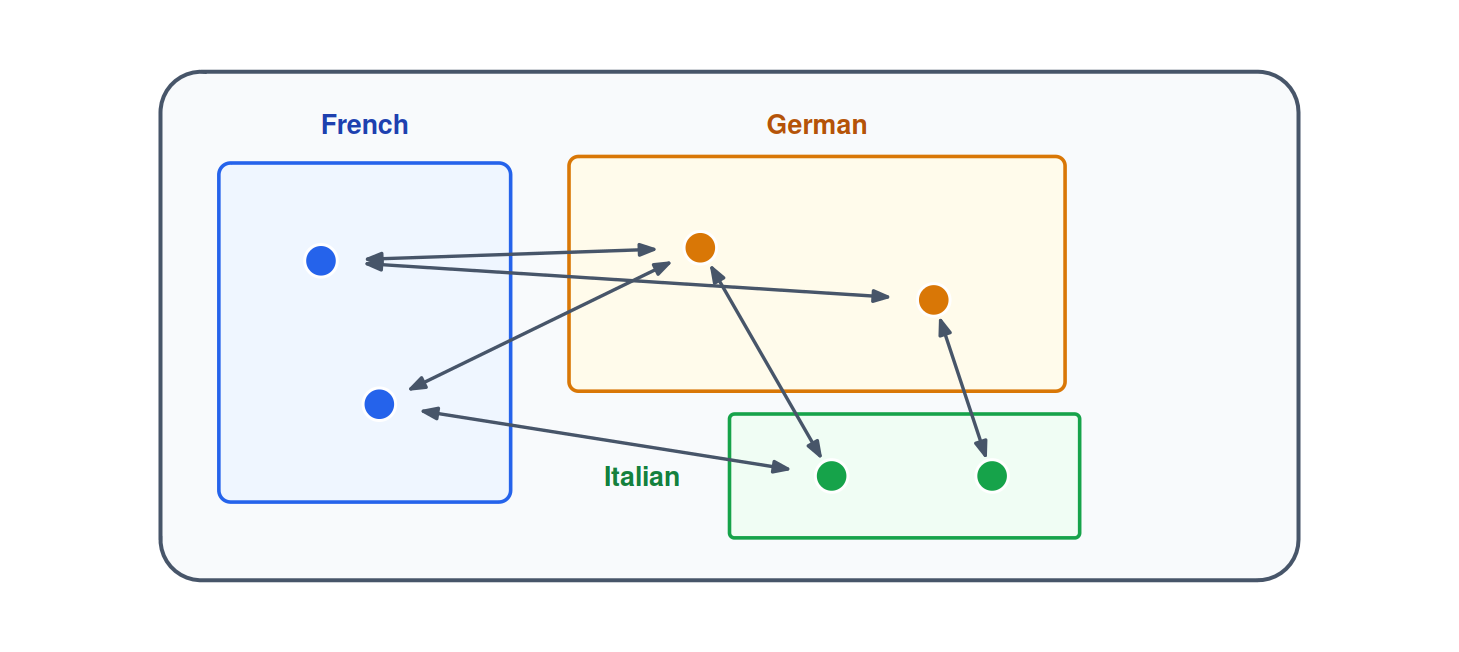
Other institutions that promote interethnic social ties can prevent conflict
Different views of democracy answer the question “What should democracy do?”
Concentrate power with clear mandates or disperse power with broad influence
Societies have tried different institutions to prevent conflict
“Which institutions work best?” is still largely an open question
Institutions are developed to solve existing conflicts and prevent future ones
This is still an active area (see Prof. Strijbis’ project)
Thank you!