6. Varieties of Dictatorship
Comparative Politics
Pictures


- Who looks more like a dictator?
- What would your grandparents say if you asked them?
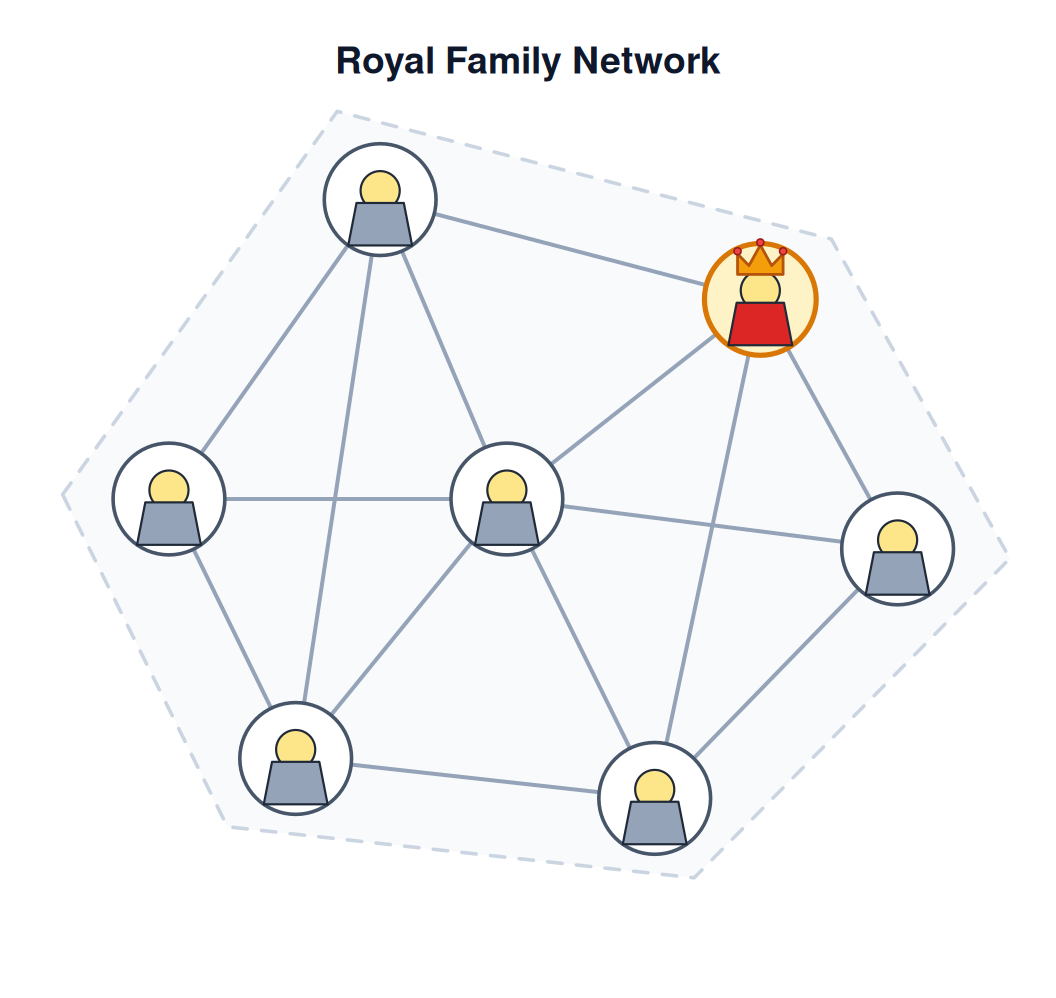
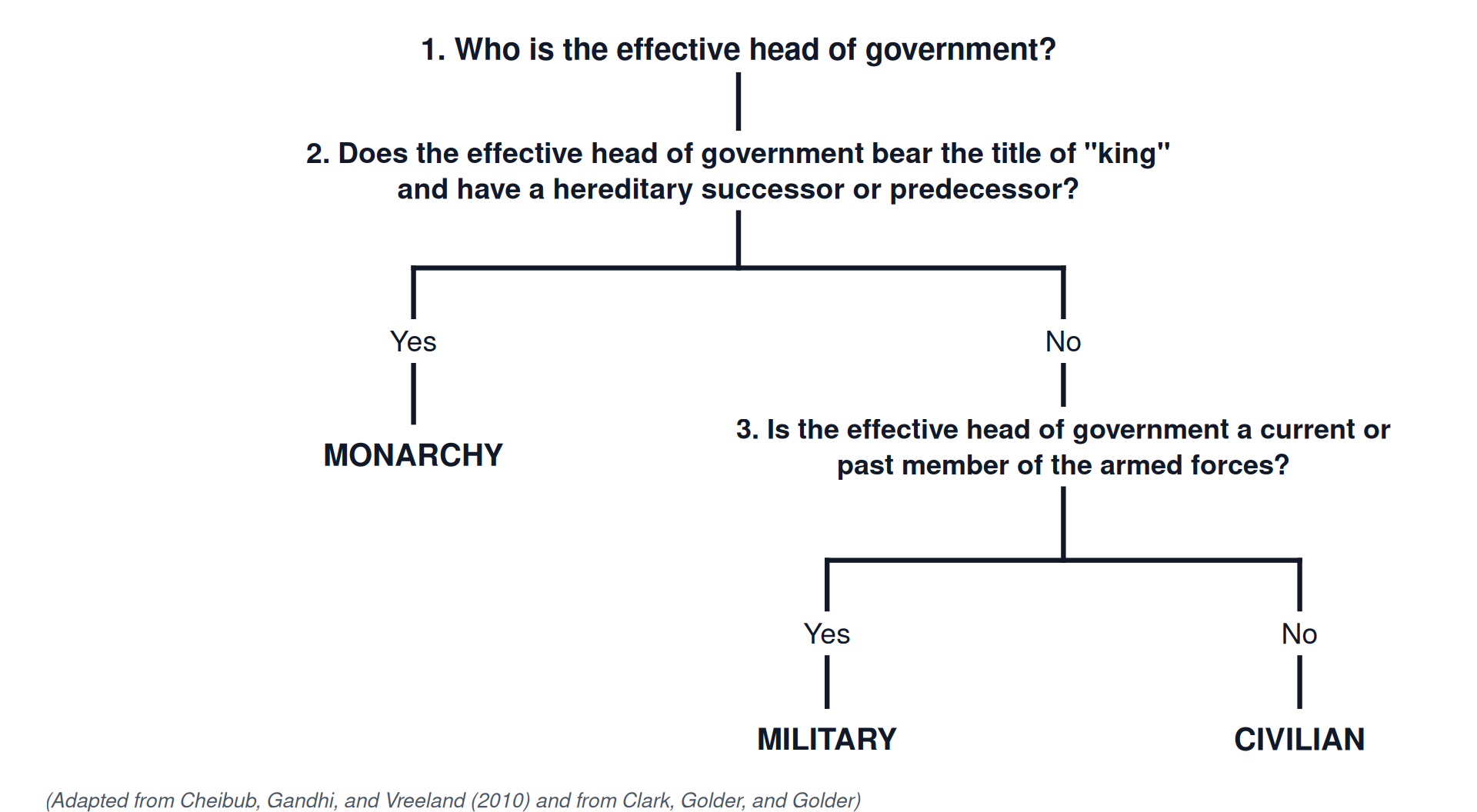
Monarchic Dictatorships
- The dictator is a king
- Key power roles are held within the royal family
- Succession happens within the royal family
Tend to be relatively more stable. Why?

Military Dictatorships
- The dictator is/was a member of the military
- Often come to power through military coups
- Motivated by threat of social unrest or economic interests
Relatively less stable. Why?

Military Dictatorships
Relatively less stable. Why?
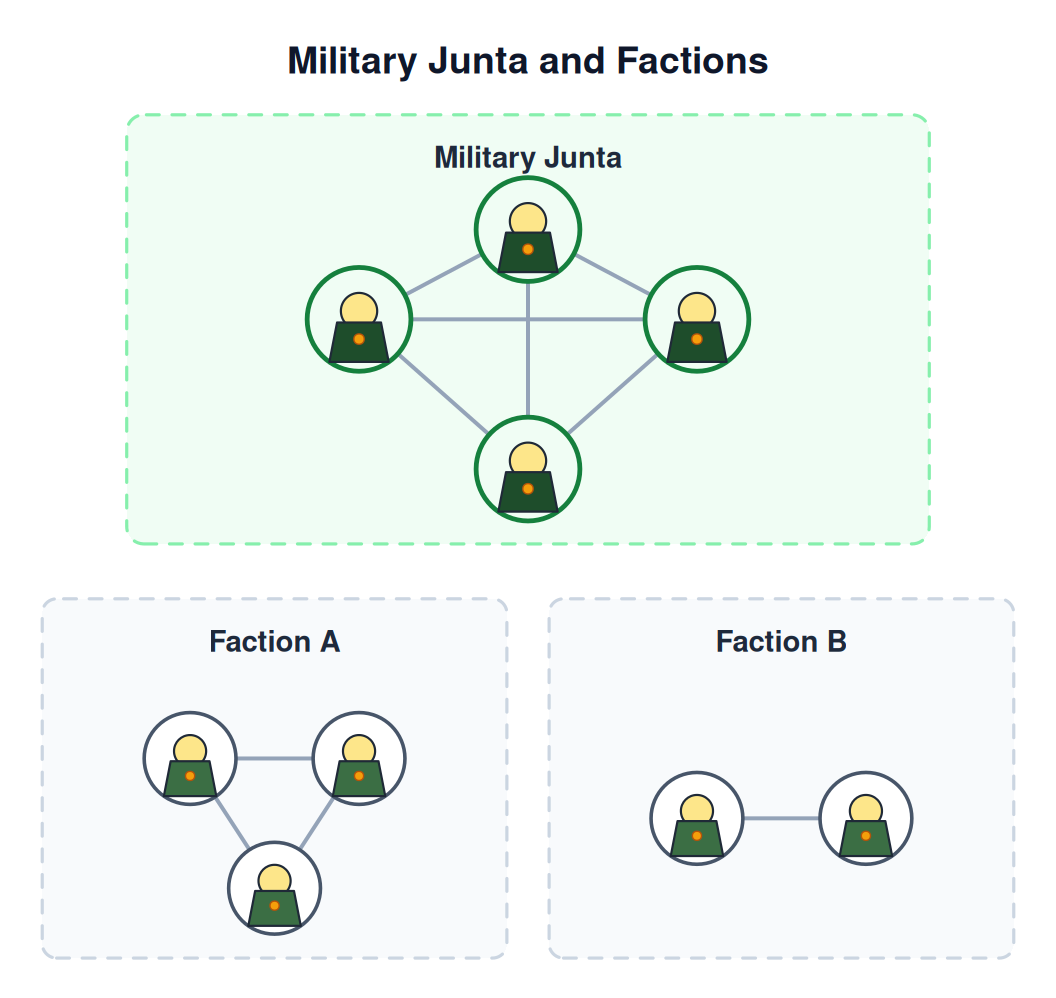
Armed forces easily split into factions
Disagreement over everyday politics leads to conflict
Diffused military strength makes balance of power uncertain
Military may prefer to “allow” democracy rather than maintain power
Civilian Dictatorships
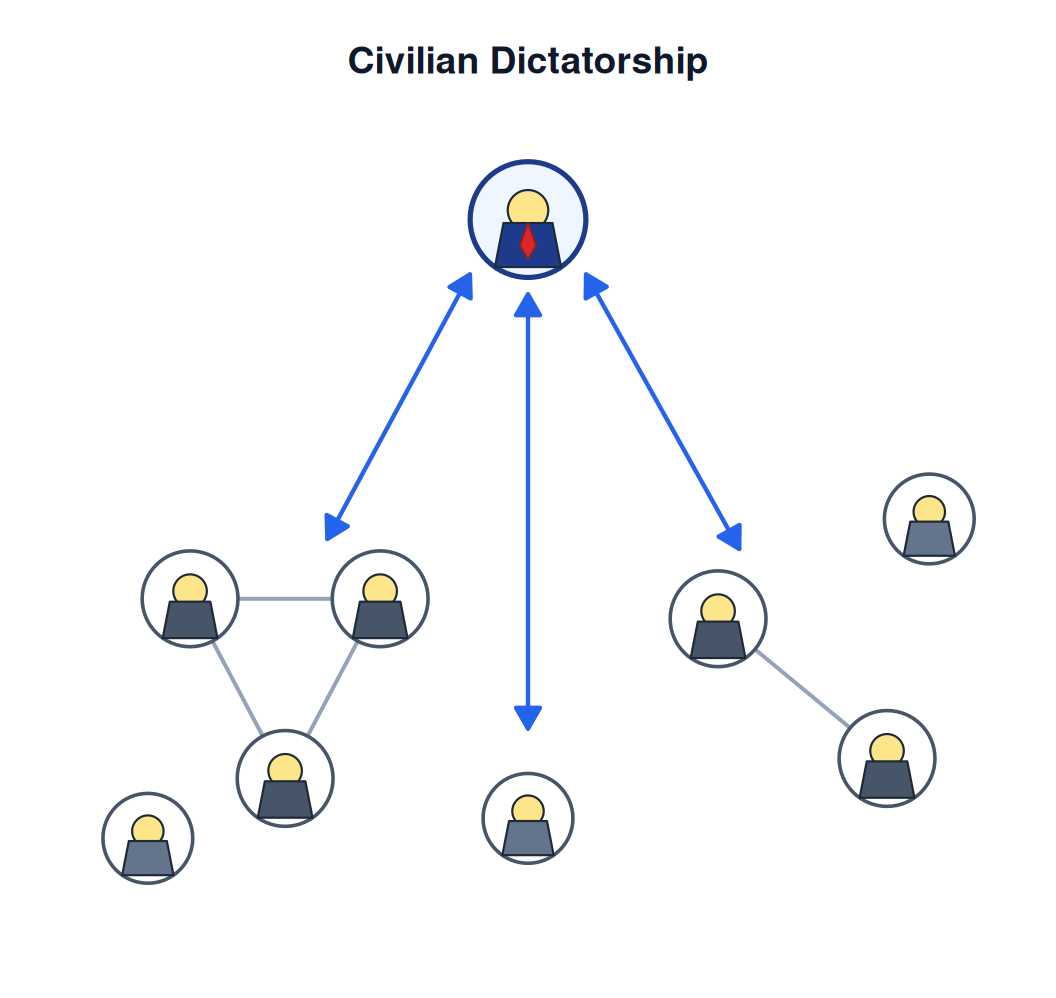
The dictator is a civilian (not a member of the army)
Needs to build a support base out of existing social groups and institutions
Party-centered regimes use party organizations to distribute resources, mobilize the masses, project power
Personality-centered regimes are organized around the dictator’s figure creating personality cults
Types of Dictatorships Over Time
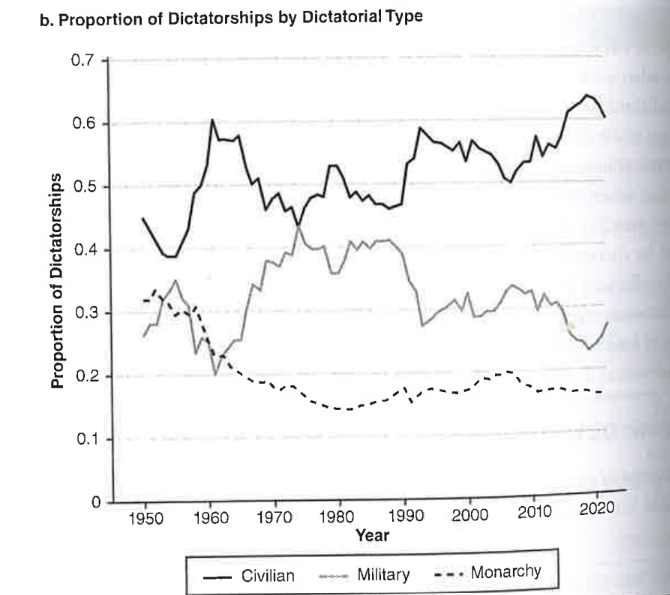
Classifying Dictatorships
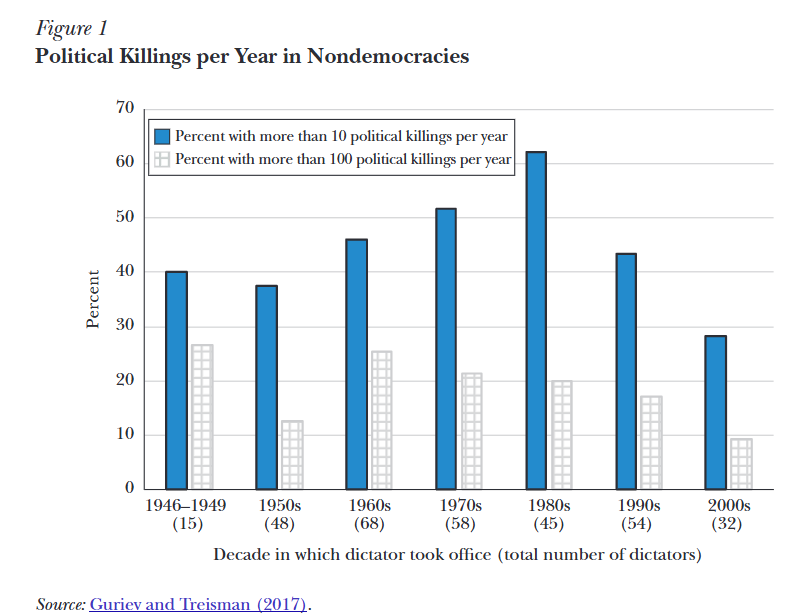
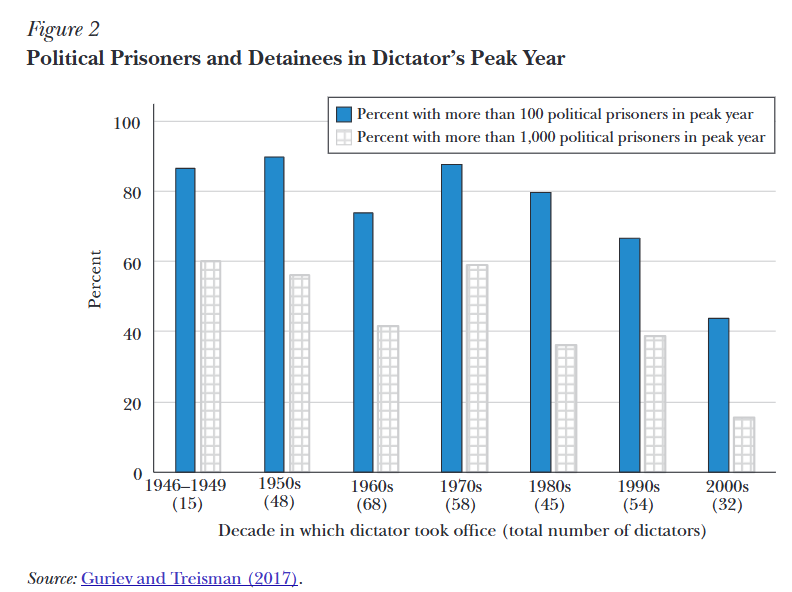
A Decrease in Arbitrary Violence
Violence has been the chief tool of dictatorship to quell opposition. Yet it is in decline
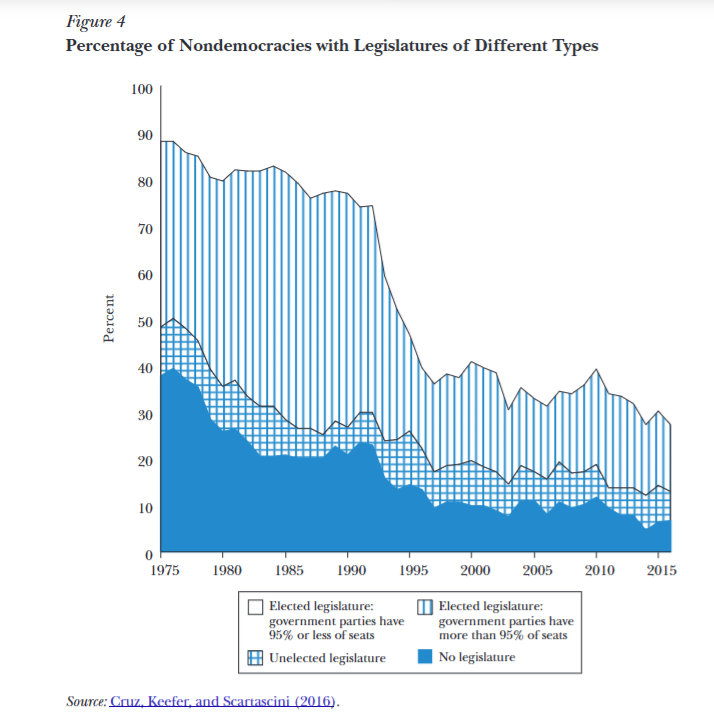
Mimicking Democracy
Rulers increasingly adopt democratic institutions: elections, parliaments
From Ideology to Information Control
Rather than censoring, dictators manipulate ostensibly “reliable” information
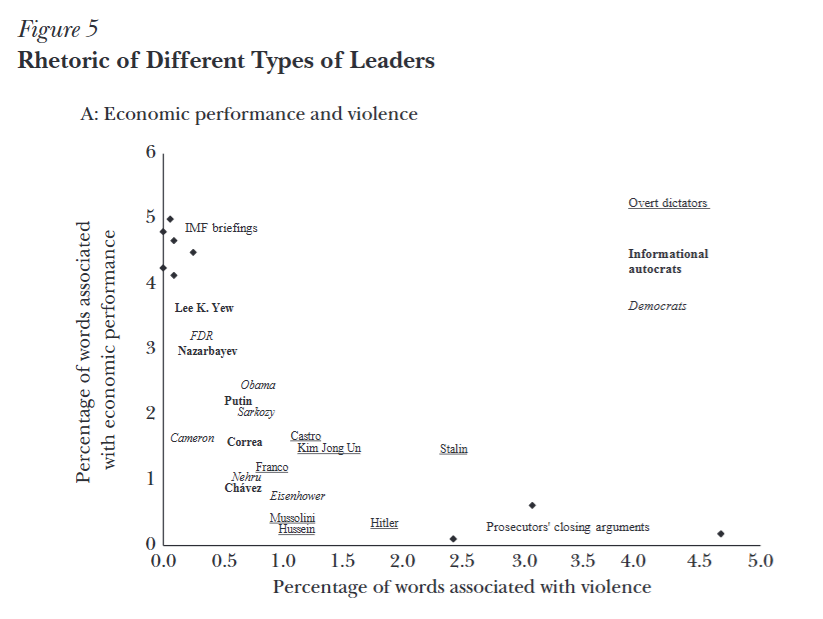
The goal is to convince educated citizens that they govern well
Selectorate Theory
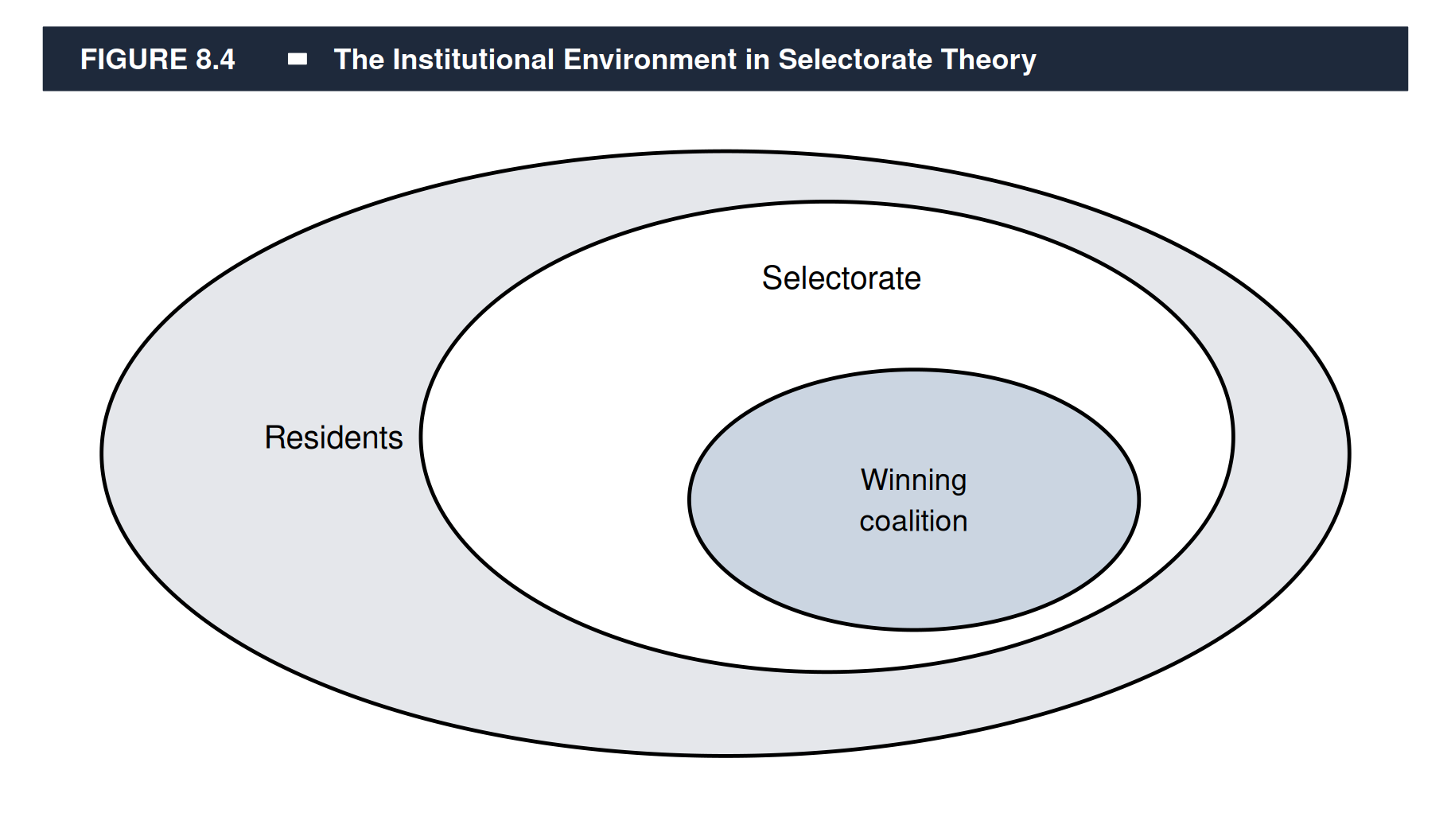
- Selectorate (\(S\)) \(\rightarrow\) group who selects the leader
- Winning Coalition (\(W\)) \(\rightarrow\) supporters needed to remain in power
Selectorate Theory: Different Regimes
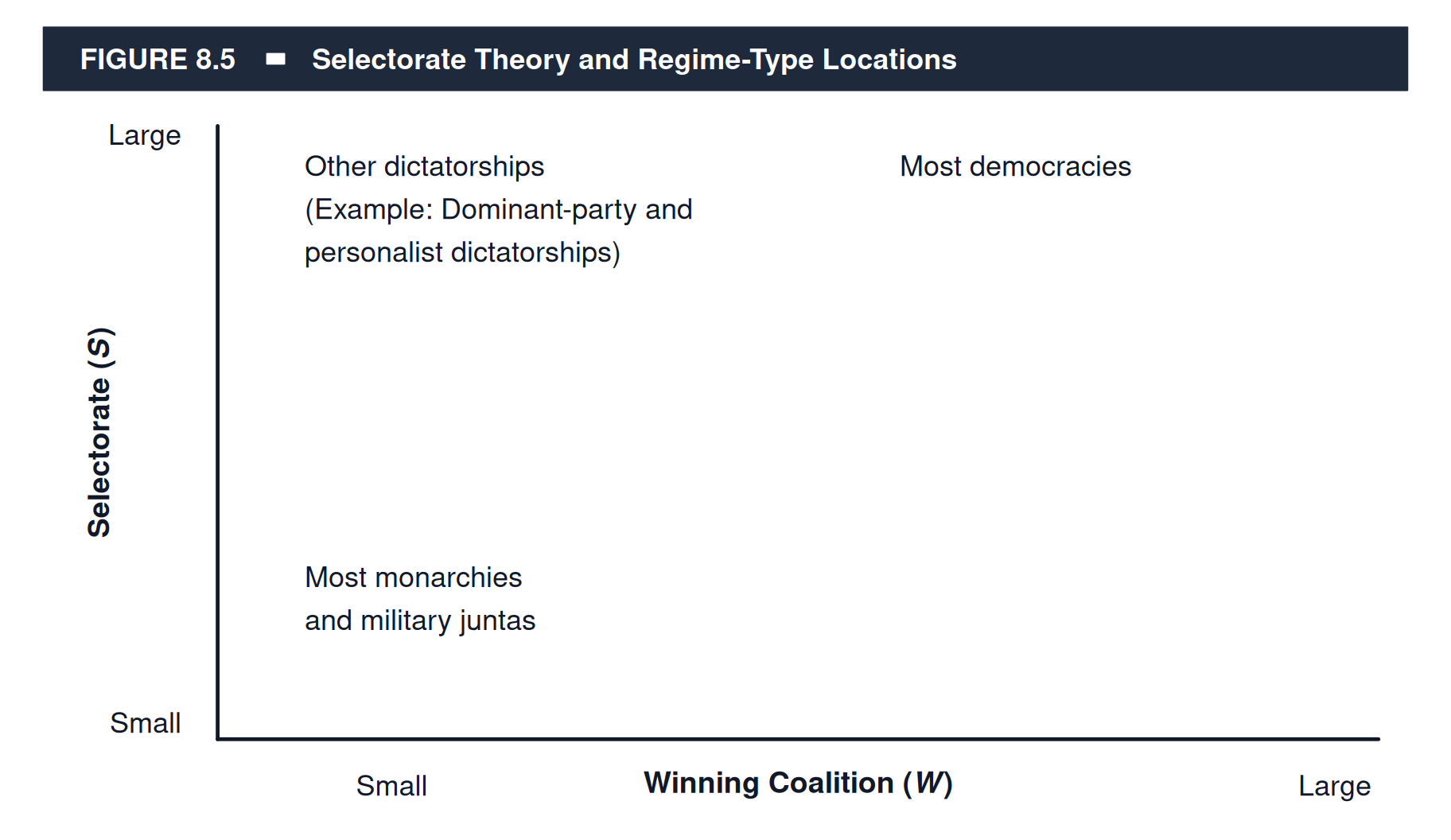
- Monarchies \(\rightarrow\) low \(S\), low \(W\) (family members in both cases)
- Democracies \(\rightarrow\) high \(S\) (enfranchised), high \(W\) (majority of voters)
Selectorate Theory: Government Performance
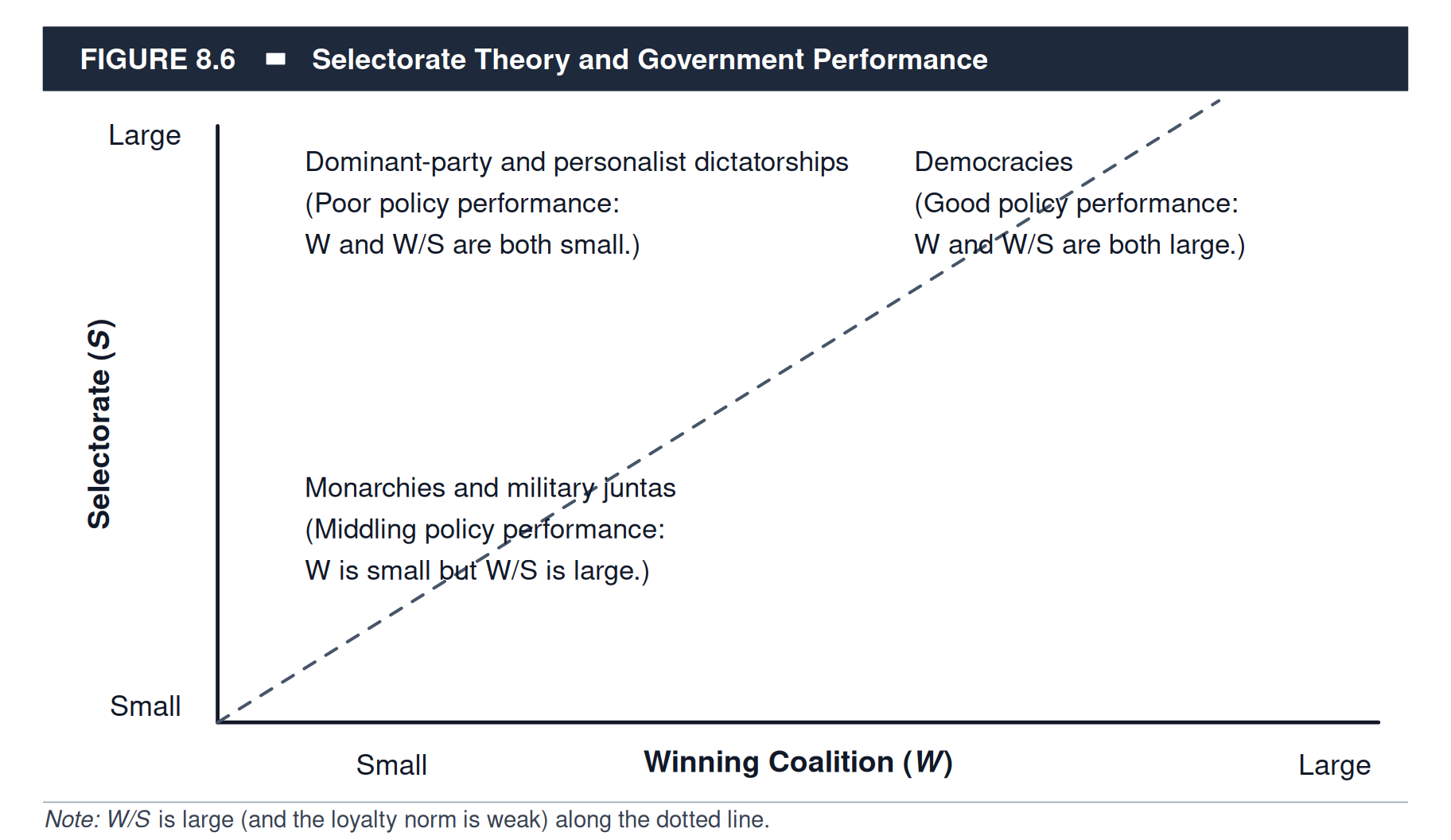
- Low \(W\), low \(W/S\) \(\rightarrow\) Few elites but loyal, the dictator can extract for himself. Poor performance (Kleptocracy)
Selectorate Theory: Government Performance
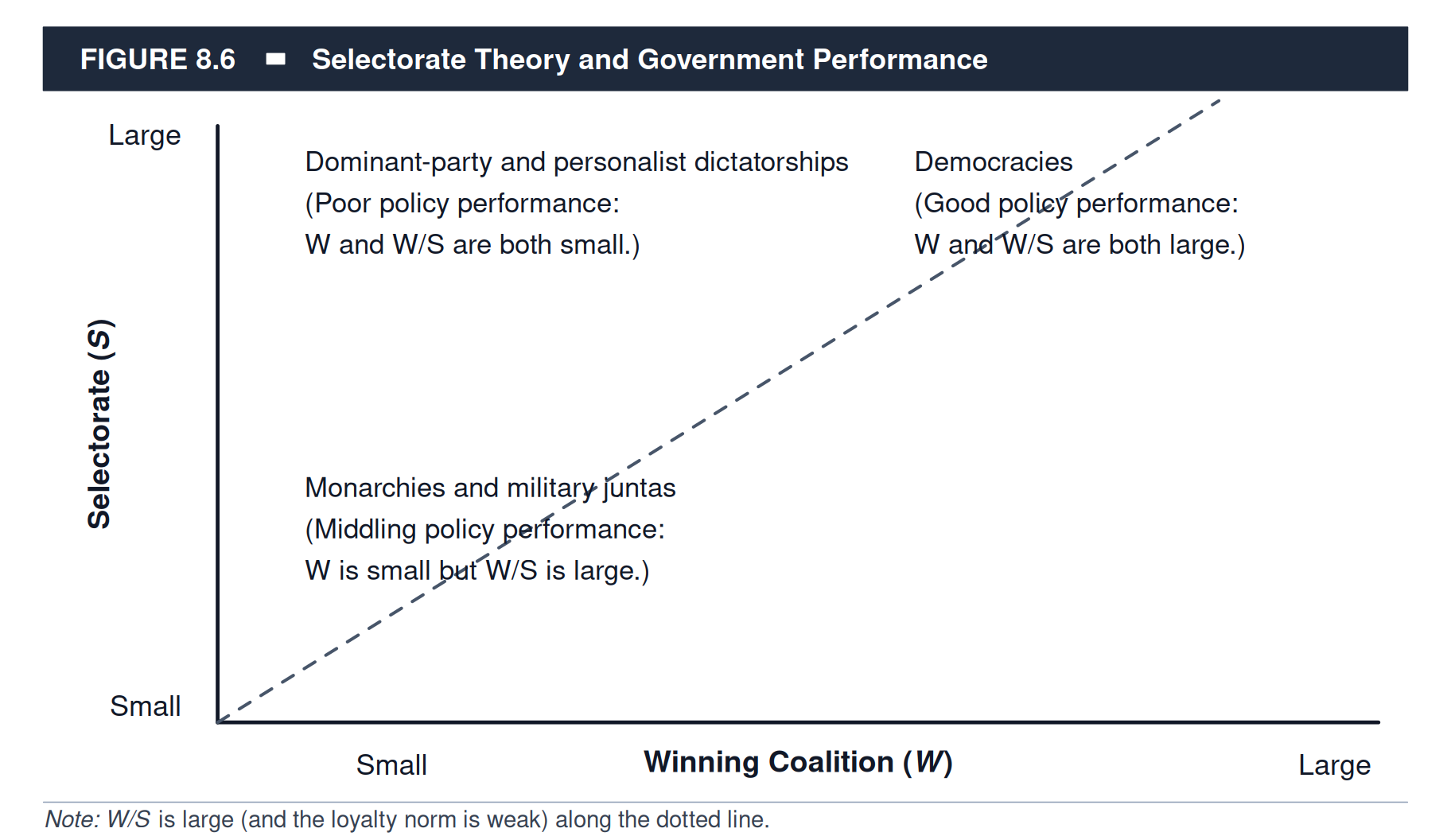
- Low \(W\), high \(W/S\) \(\rightarrow\) Few elites, but not loyal, they need to receive many resources. Middling performance
Selectorate Theory: Government Performance
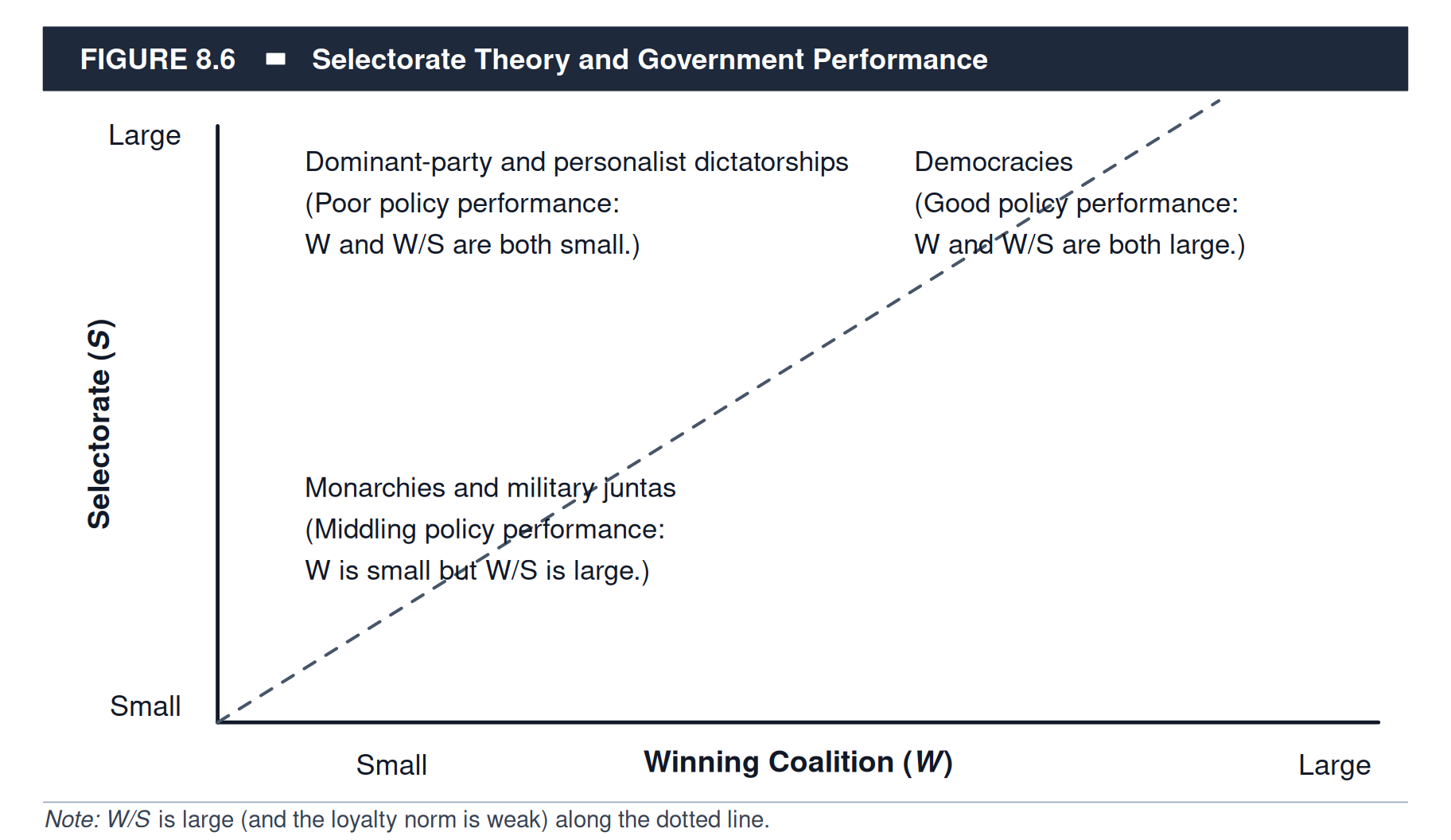
- High \(W\), high \(W/S\) \(\rightarrow\) Diffuse support and low loyalty require public goods. Good performance