5. Democratic Transitions

Comparative Politics

Giacomo Lemoli

From the Last Class

  • We have seen what a democracy (early and modern) is

  • We have seen how development may lead to democratic reforms

A few issues still remain

  • Modern democracy is about mass participation

  • So far, we have assumed that

    • People automatically respond to changing conditions
    • People automatically “act as one” (or coordinate)
  • When the “masses” are large, this is not so easy to achieve

  • We need to understand the forces that bring people together for democracy

Our Plan for Today

We will study democratic transitions as decision-making problems

Analyze the forces that lead people to obtain democratic transitions

Bottom-up transitions \(\rightarrow\) people mobilize for democracy

  • Key problem: citizens’ coordination under risk of repression

  • Two models: collective action theory and tipping model

  • Explain why revolts are rare and why they surprisingly occur

Top-down transitions \(\rightarrow\) regime concedes reforms

  • Key problem: the regime wants to reform but not democratize

  • Regime divisions and information are crucial

  • Explain why transitions may start from the regime itself

Our Case

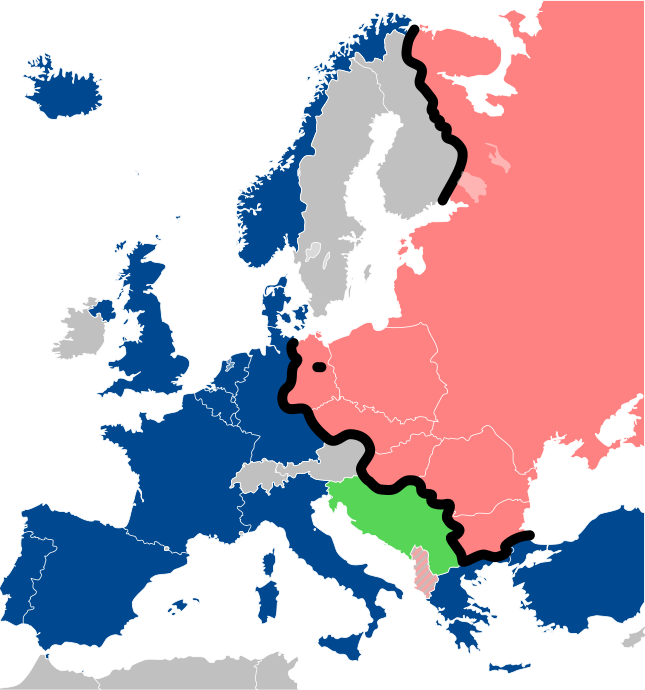
Post-War Europe and the Warsaw Pact

Source: Sémhur/Wikimedia Commons

The Unexpected Fall of Communism in 1989

Source: RIA Novosti Archive
  • Economic and political crises in the USSR in the 1980s
  • Liberalization reforms by Gorbachev \(\rightarrow\) perestroika, glasnost
  • Fuels opposition groups in Eastern Europe
  • Sudden fall of Communist regimes and wave of transitions

Communist regimes looked solid but crumbled very fast \(\rightarrow\) a surprise

We want to explain why such epochal events can be surprising

Bottom-Up Transitions

East Germany 1989

Source: WikiNight/Wikimedia Commons
  • August 1989: Hungary opens border with Austria \(\rightarrow\) 13,000 East Germans flee to West

  • Mass demonstrations of citizens seeking escape or reform

  • Regime crackdown fails, no military help from USSR

  • November 1989: Travel restrictions lifted, people breach the Berlin wall

  • October 1990: German reunification

The Puzzle of Revolutions

  • East Germany had a “bottom-up” democratic transition

  • The “Puzzle” for us is why stable regimes end in sudden revolutions

  • Why didn’t people revolt earlier if they disapproved of the regime?

  • Why did the regime look so stable despite worsening economic conditions?

  • Why are mass revolutions of this type so rare?

\(\implies\) This has to do with the nature of collective action

Collective Action Theory: Foundations and Logic

Remember the example in our first class: organizing housecleaning

  • Roommates need to do their part, but would let the other work

The core of this problem is the same as that of protesting

  • Democracy can be reached only if many people protest

  • Protesting is risky (repression)

  • Once democracy is reached, everyone can enjoy it \(\rightarrow\) public good

  • The best thing is to stay home \(\rightarrow\) free-ride

    • If the protest fails, you don’t risk anything
    • If the protest succeeds you enjoy the benefits

Collective Action Theory

N East Germans, K of them need to protest to obtain democracy

Personal cost for participation, public good in case of success

Scenario 1
Fewer than \(K-1\) participate
Scenario 2
Exactly \(K-1\) participate
Scenario 3
\(K\) or more participate
Participate Pay cost; don’t receive benefit Pay cost; receive benefit Pay cost; receive benefit
Don’t participate Don’t pay cost; don’t receive benefit Don’t pay cost; don’t receive benefit Don’t pay cost; receive benefit

Collective Action Theory

N East Germans, K of them need to protest to obtain democracy

Personal cost for participation, public good in case of success

Scenario 1
Fewer than \(K-1\) participate
Scenario 2
Exactly \(K-1\) participate
Scenario 3
\(K\) or more participate
Participate Pay cost; don’t receive benefit Pay cost; receive benefit Pay cost; receive benefit
Don’t participate Don’t pay cost; don’t receive benefit Don’t pay cost; don’t receive benefit Don’t pay cost; receive benefit

Collective Action Theory

N East Germans, K of them need to protest to obtain democracy

Personal cost for participation, public good in case of success

Scenario 1
Fewer than \(K-1\) participate
Scenario 2
Exactly \(K-1\) participate
Scenario 3
\(K\) or more participate
Participate Pay cost; don’t receive benefit Pay cost; receive benefit Pay cost; receive benefit
Don’t participate Don’t pay cost; don’t receive benefit Don’t pay cost; don’t receive benefit Don’t pay cost; receive benefit

Collective Action Theory

N East Germans, K of them need to protest to obtain democracy

Personal cost for participation, public good in case of success

Scenario 1
Fewer than \(K-1\) participate
Scenario 2
Exactly \(K-1\) participate
Scenario 3
\(K\) or more participate
Participate Pay cost; don’t receive benefit Pay cost; receive benefit Pay cost; receive benefit
Don’t participate Don’t pay cost; don’t receive benefit Don’t pay cost; don’t receive benefit Don’t pay cost; receive benefit

Collective Action Theory

N East Germans, K of them need to protest to obtain democracy

Personal cost for participation, public good in case of success

Scenario 1
Fewer than \(K-1\) participate
Scenario 2
Exactly \(K-1\) participate
Scenario 3
\(K\) or more participate
Participate Pay cost; don’t receive benefit Pay cost; receive benefit Pay cost; receive benefit
Don’t participate Don’t pay cost; don’t receive benefit Don’t pay cost; don’t receive benefit Don’t pay cost; receive benefit

Collective Action Theory

N East Germans, K of them need to protest to obtain democracy

Personal cost for participation, public good in case of success

Scenario 1
Fewer than \(K-1\) participate
Scenario 2
Exactly \(K-1\) participate
Scenario 3
\(K\) or more participate
Participate Pay cost; don’t receive benefit Pay cost; receive benefit Pay cost; receive benefit
Don’t participate Don’t pay cost; don’t receive benefit Don’t pay cost; don’t receive benefit Don’t pay cost; receive benefit

Collective Action Theory

N East Germans, K of them need to protest to obtain democracy

Personal cost for participation, public good in case of success

Scenario 1
Fewer than \(K-1\) participate
Scenario 2
Exactly \(K-1\) participate
Scenario 3
\(K\) or more participate
Participate Pay cost; don’t receive benefit Pay cost; receive benefit Pay cost; receive benefit
Don’t participate Don’t pay cost; don’t receive benefit Don’t pay cost; don’t receive benefit Don’t pay cost; receive benefit

Collective Action Theory

N East Germans, K of them need to protest to obtain democracy

Personal cost for participation, public good in case of success

Scenario 1
Fewer than \(K-1\) participate
Scenario 2
Exactly \(K-1\) participate
Scenario 3
\(K\) or more participate
Participate Pay cost; don’t receive benefit Pay cost; receive benefit Pay cost; receive benefit
Don’t participate Don’t pay cost; don’t receive benefit Don’t pay cost; don’t receive benefit Don’t pay cost; receive benefit

Implications of the Theory

Direct implications:

  • Larger N (relative to K) \(\implies\) greater free-rider problem
    • Less likely that you are decisive
    • More difficult to monitor participants
  • Small groups are often more successful at collective action
    • Think of lobbies vs large groups of voters

Subtler implications:

  • The absence of protest does not mean that most people support the regime

  • The conditions for expressing discontent may not be there

\(\implies\) But what are these conditions?

Tipping Models: Foundations and Logic

Tipping models \(\rightarrow\) how people can suddenly overcome collective action problems

Relative to Collective Action Theory, we introduce some elements

  • People have different personal motivations to protest
    • Some (e.g., “rebels”) would always protest, others (e.g., “loyalists”) would never protest

Key idea: in a dictatorship people conceal their real support for the government

  • So people don’t know how many others want to protest
  • A few people protesting can motivate others \(\implies\) revolutionary cascade

Tipping Models

How can we formalize this intuition?

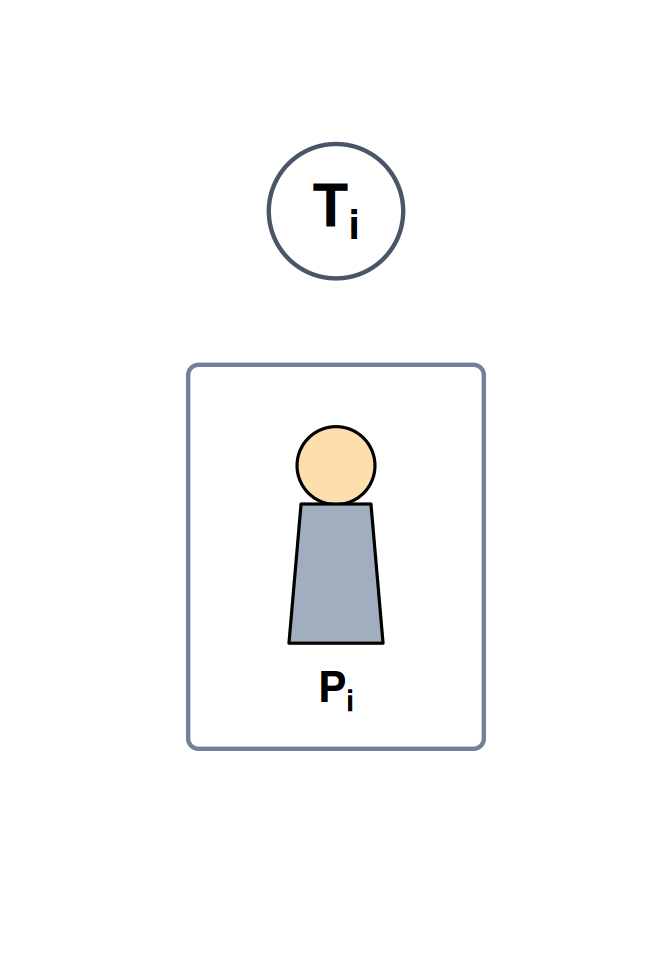
  • People have their own propensity to protest T (“revolutionary threshold”)
  • Different people may have different T
    • Q: T=how many people need to protest for me to join them
    • Q: Lower T \(\implies\) more or less support?
    • How can we interpret T?

Tipping Models: An Example

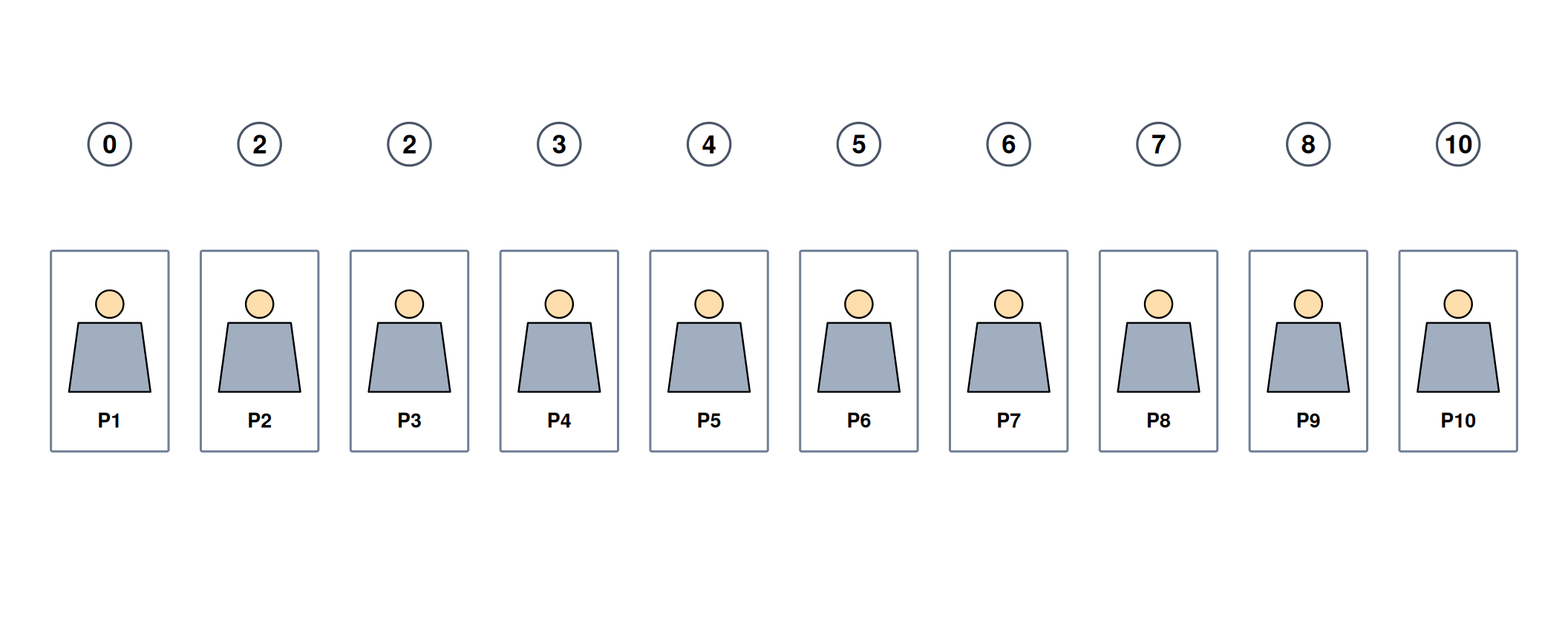
Consider a society with 10 people
Tipping Models: An Example

Consider a society with 10 people
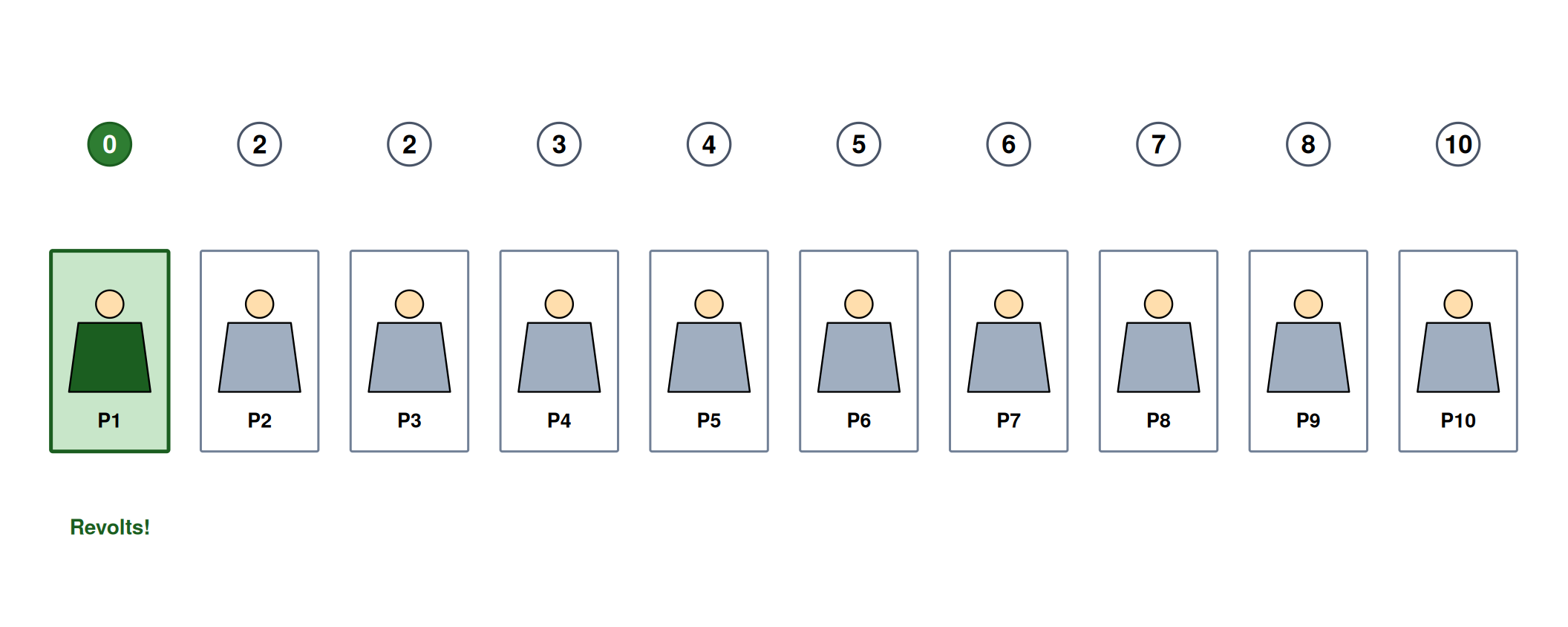
  • Person 1 (\(T = 0\)) protests, the others require at least 2
  • Protest size is 1

Tipping Models: Changing Thresholds

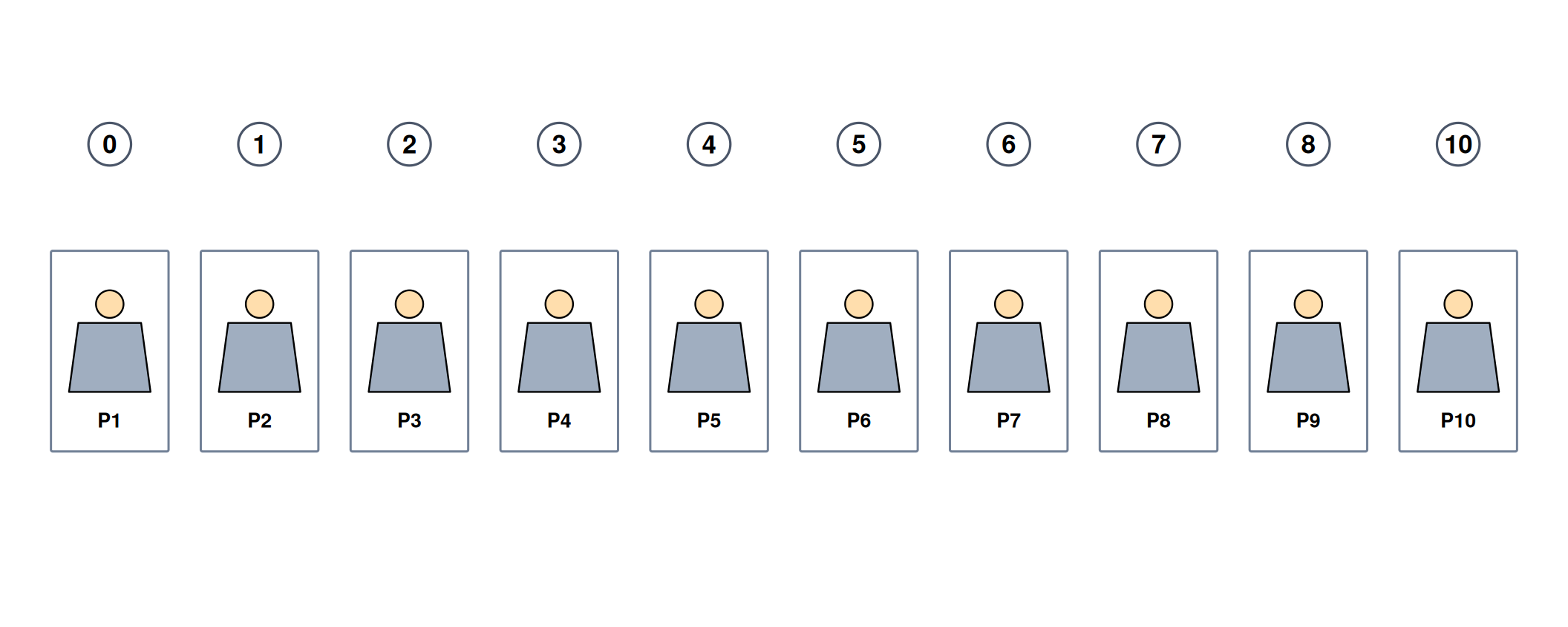
Now suppose P2’s threshold goes down from 2 to 1
Tipping Models: Changing Thresholds

Now suppose P2’s threshold goes down from 2 to 1
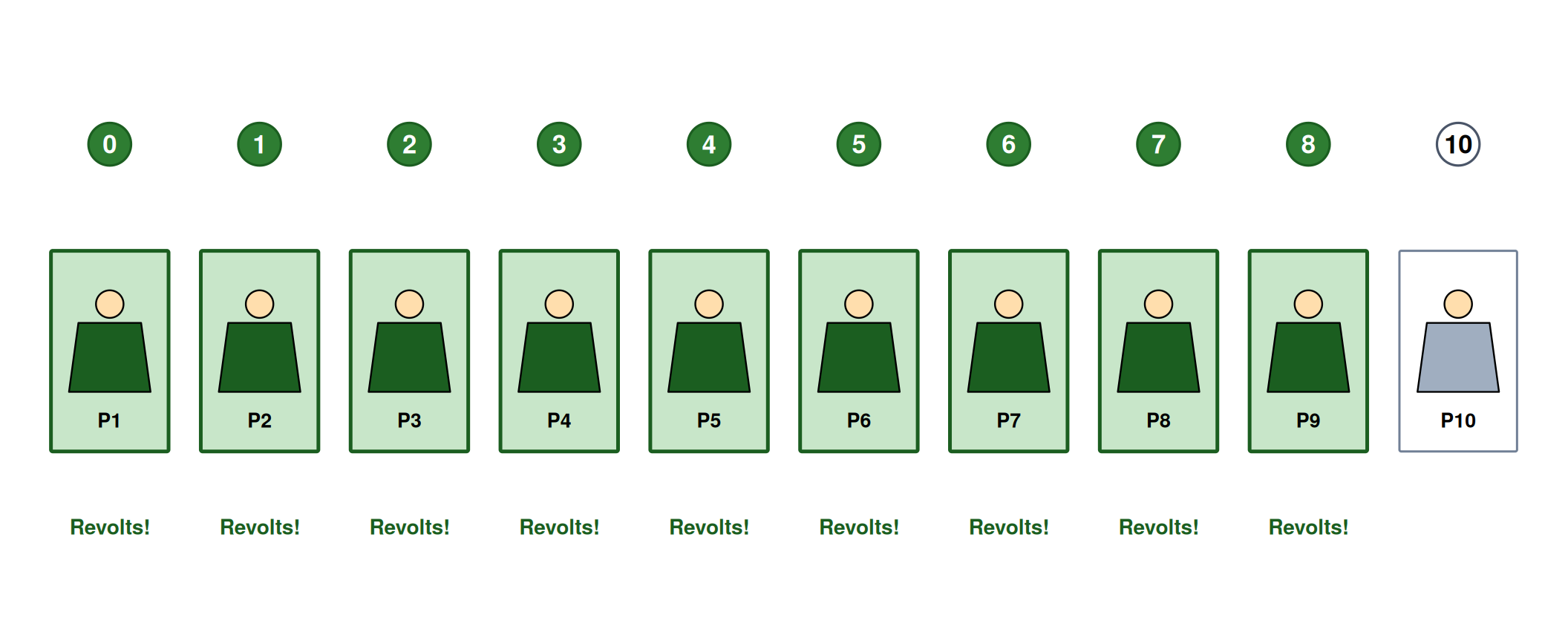
  • Person 1 (\(T = 0\)) protests \(\rightarrow\) Person 2 (\(T = 1\)) joins \(\rightarrow\) Person 3 \(\dots\)
  • 9/10 people protest \(\rightarrow\) revolutionary cascade

Tipping Models: Another Example

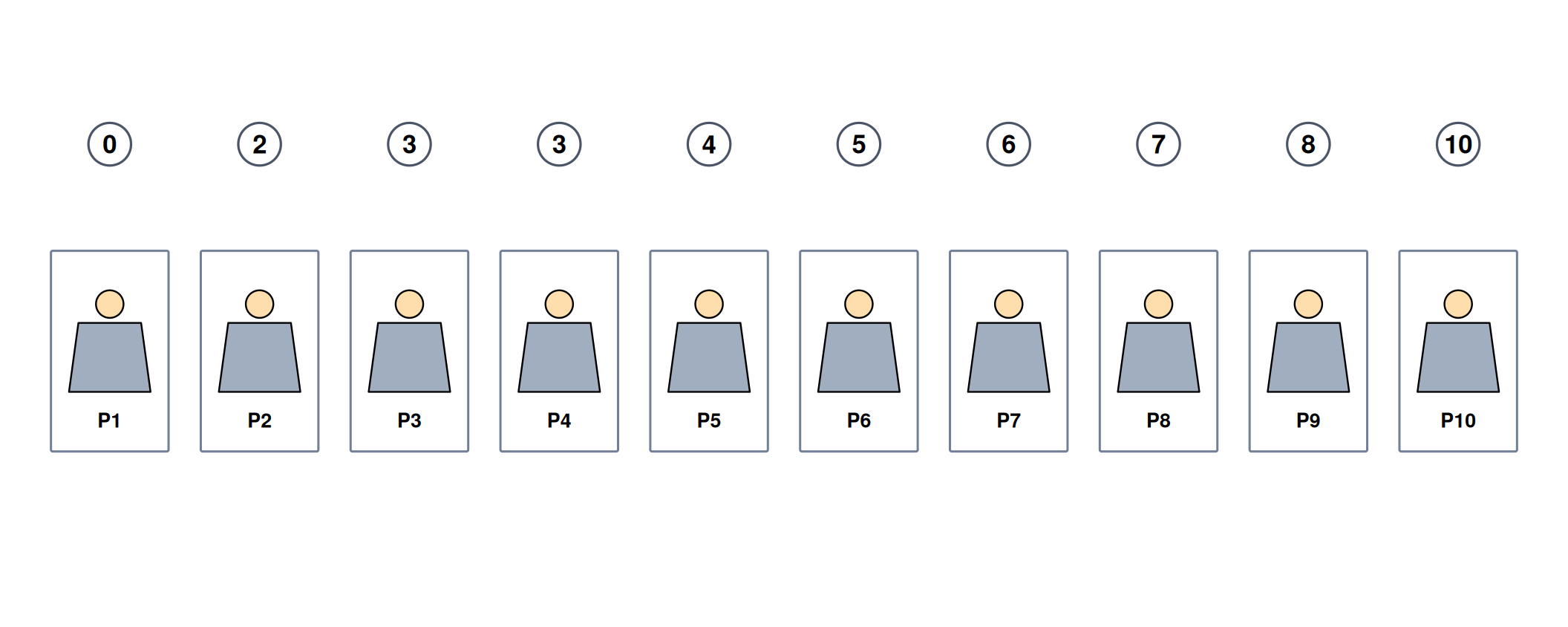
Consider a different society
Tipping Models: Another Example

Consider a different society
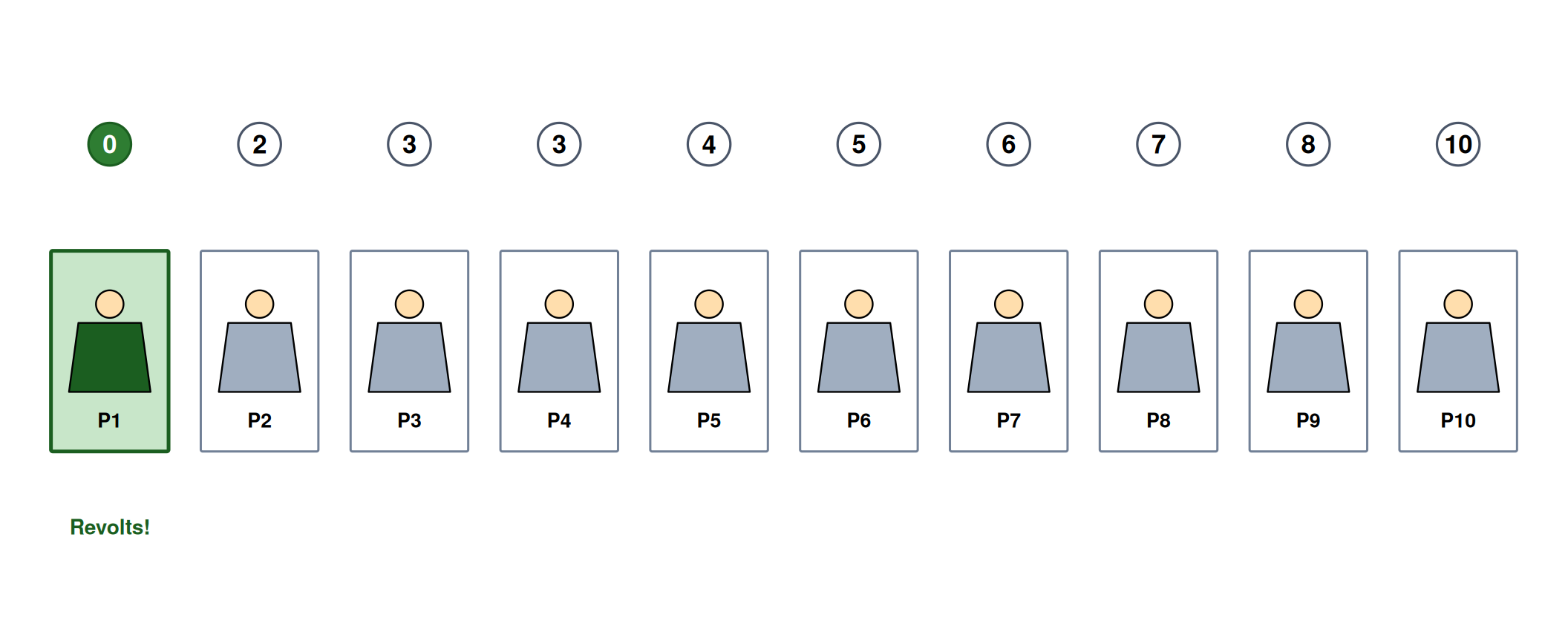
  • Person 1 (\(T = 0\)) revolts alone, others require at least 2 people
  • Protest size is 1

Tipping Models: Another Example

Now let’s change P2 from 2 to 1 as before
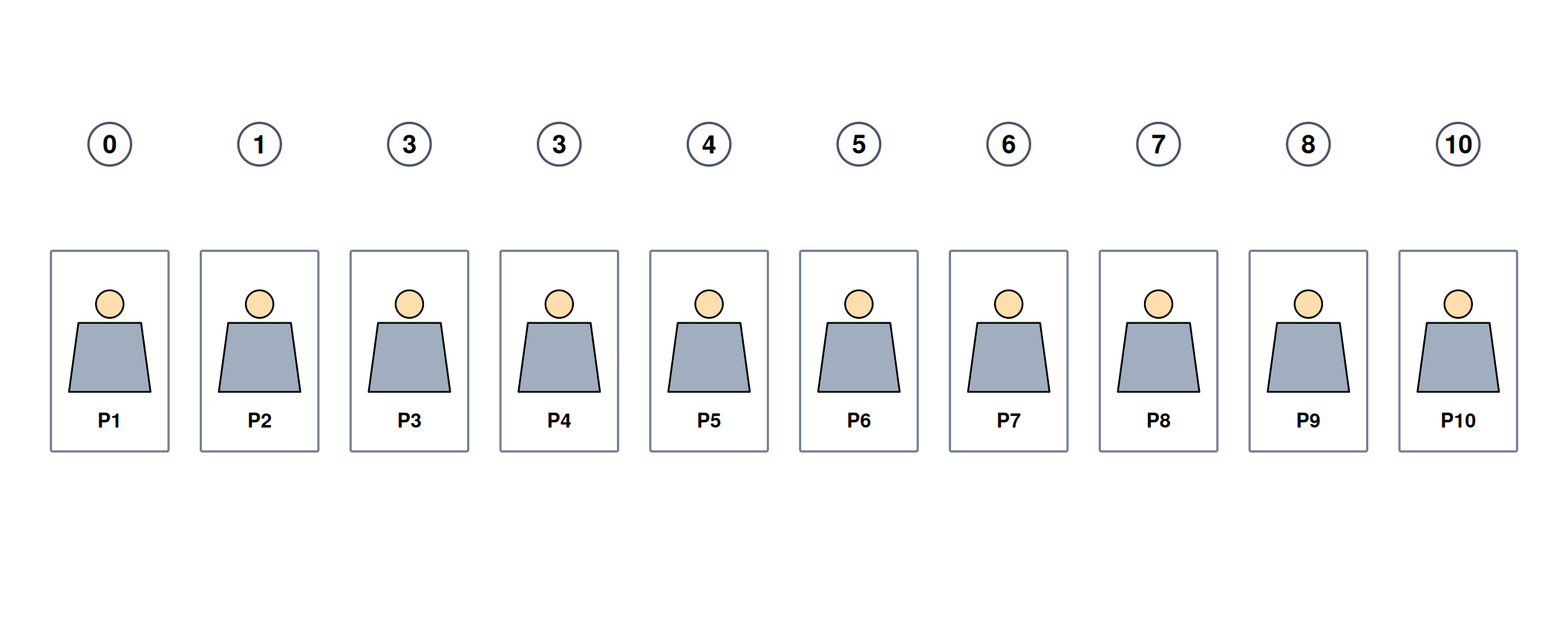
Tipping Models: Another Example

Now let’s change P2 from 2 to 1 as before
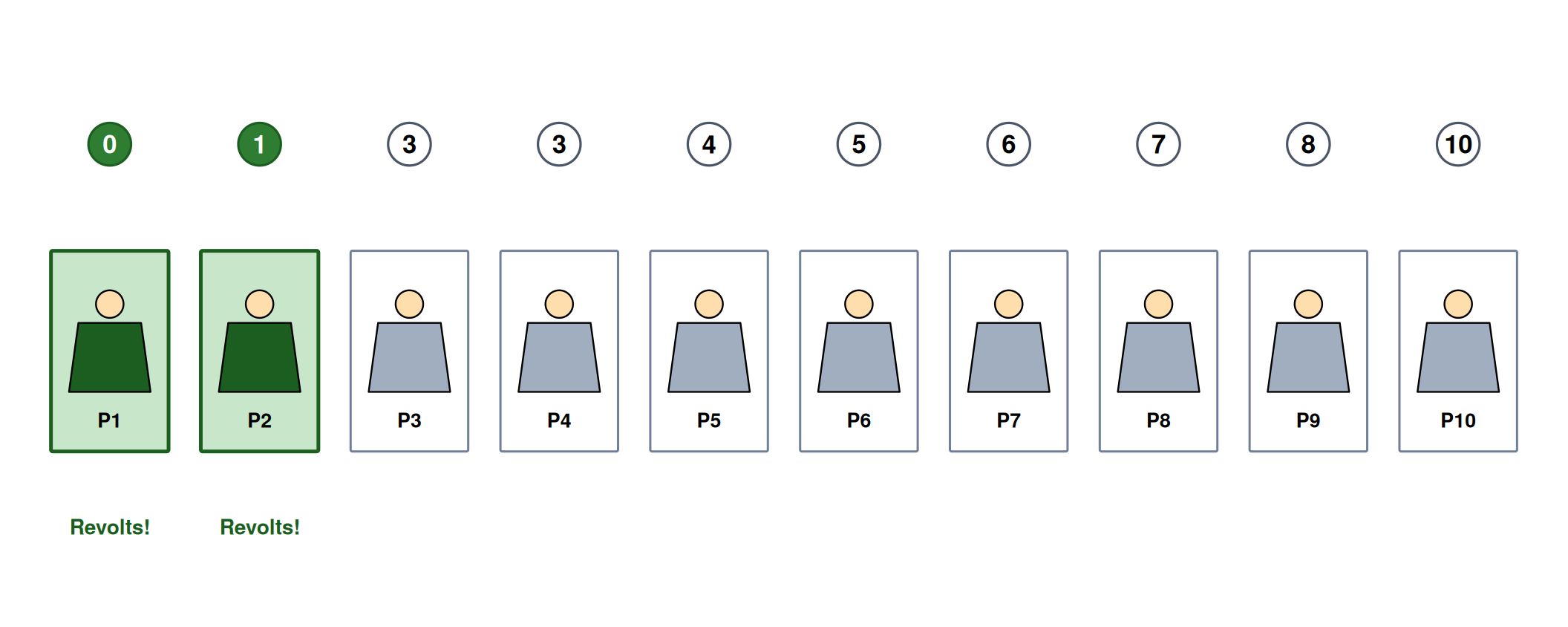
  • Person 1 (\(T = 0\)) and Person 2 (\(T = 1\)) protest, others need at least 3
  • The protest size is 2

Tipping Models: “Boiling Point”

A final example
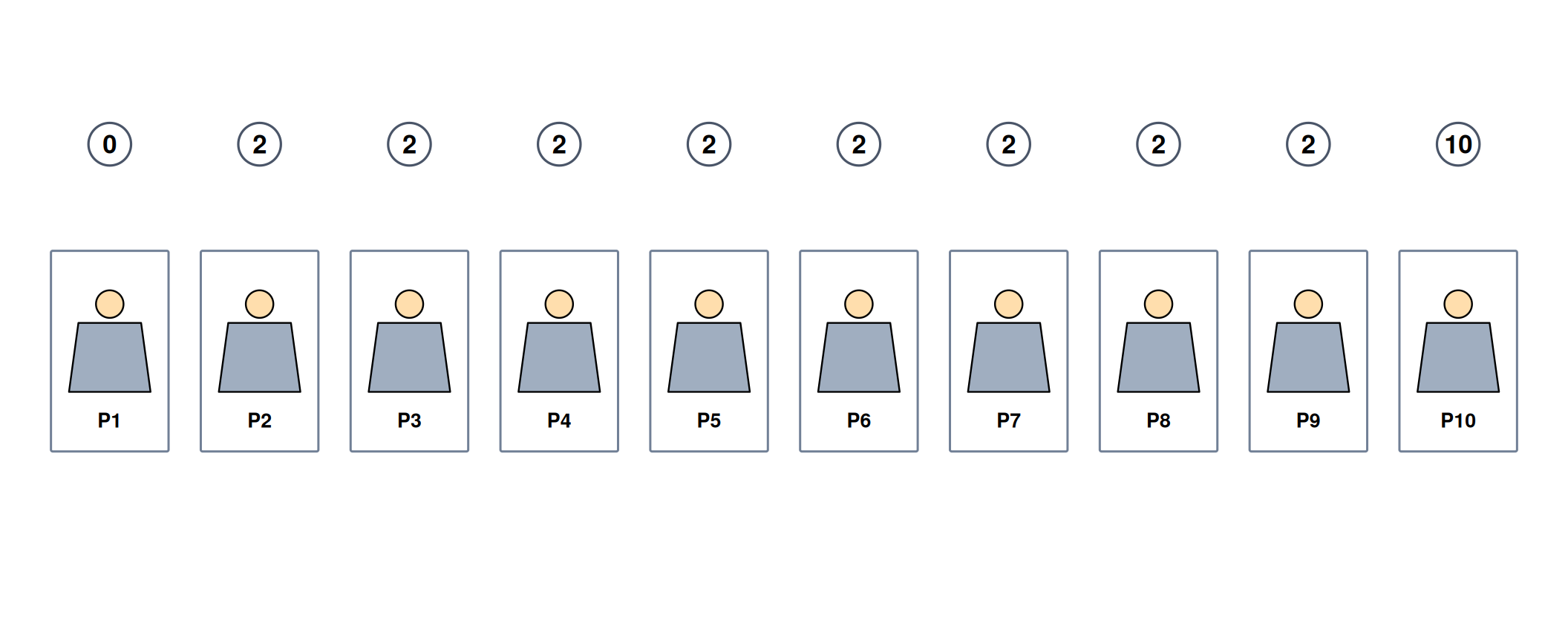
Tipping Models: “Boiling Point”

A final example
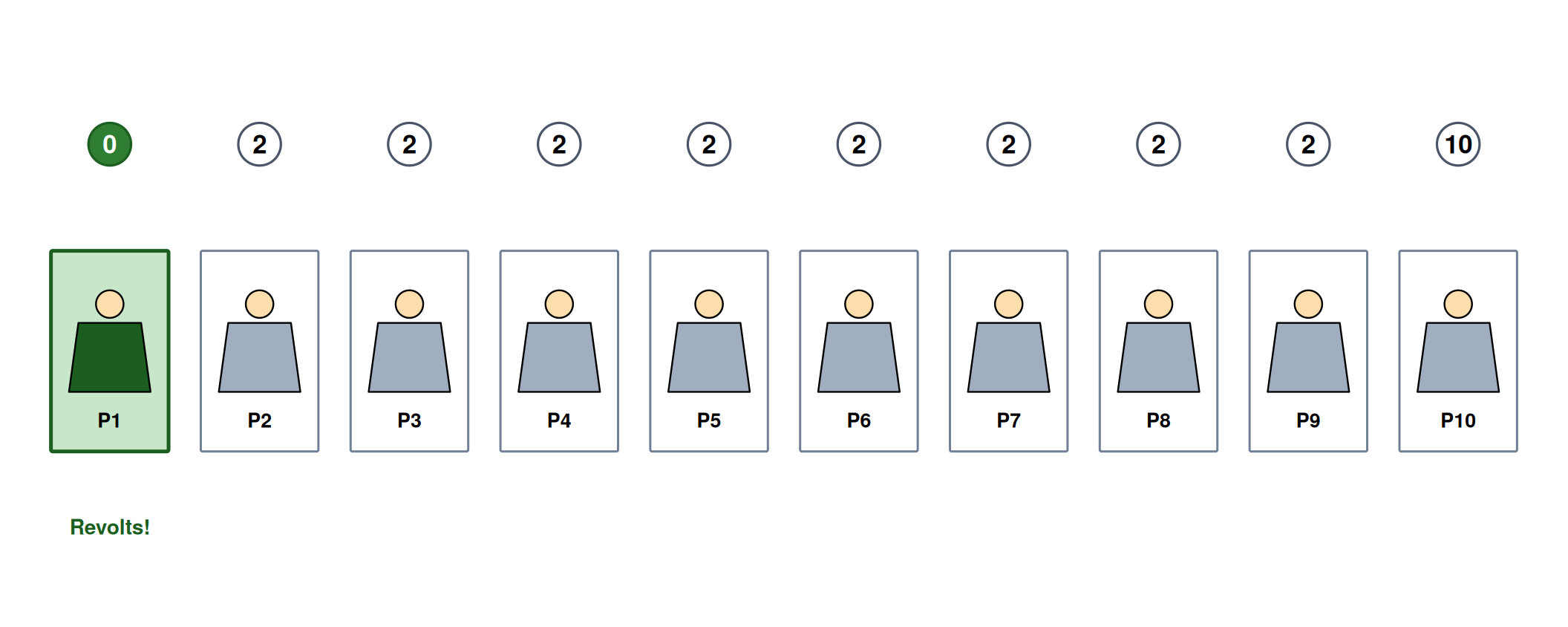
  • Almost everyone is close to revolting, but Person 1 (\(T = 0\)) protests alone
  • Highly discontent society, yet only 1 person protests

Tipping Models: “Boiling Point”

Now let’s make one person willing to protest
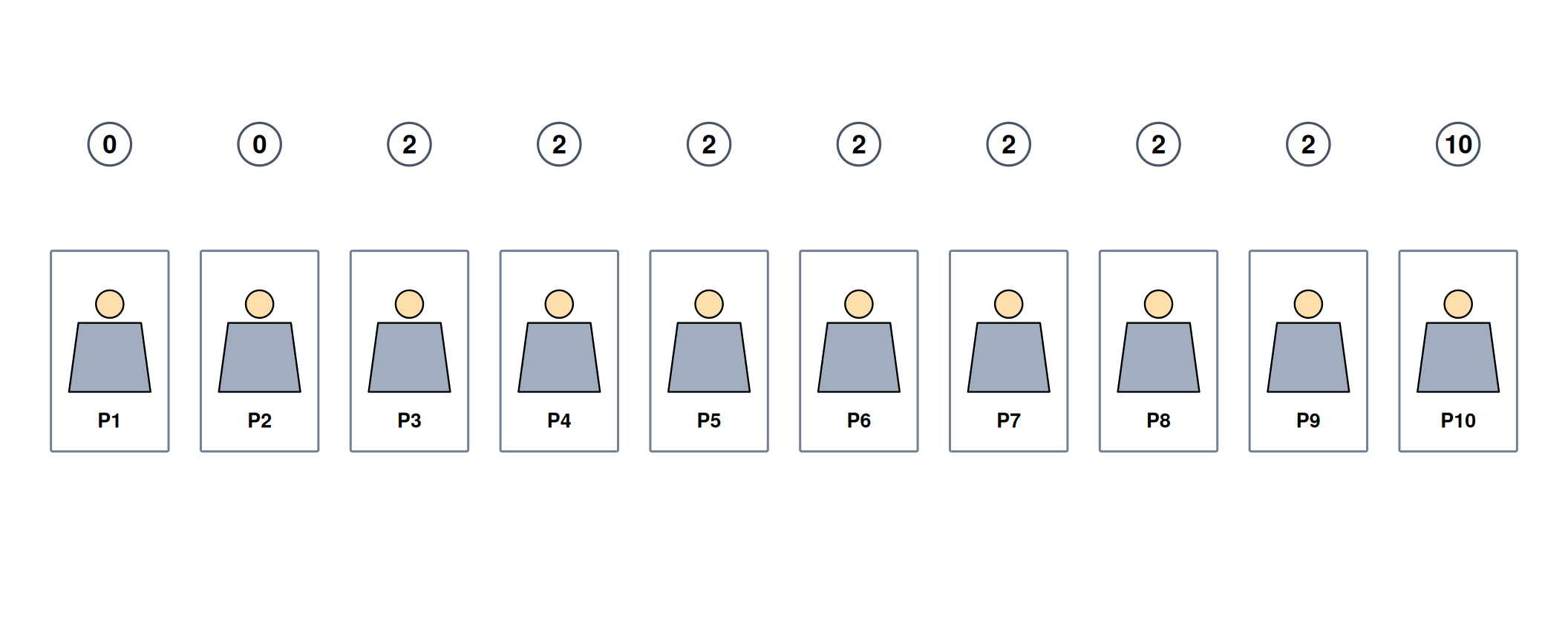
Tipping Models: “Boiling Point”

Now let’s make one person willing to protest
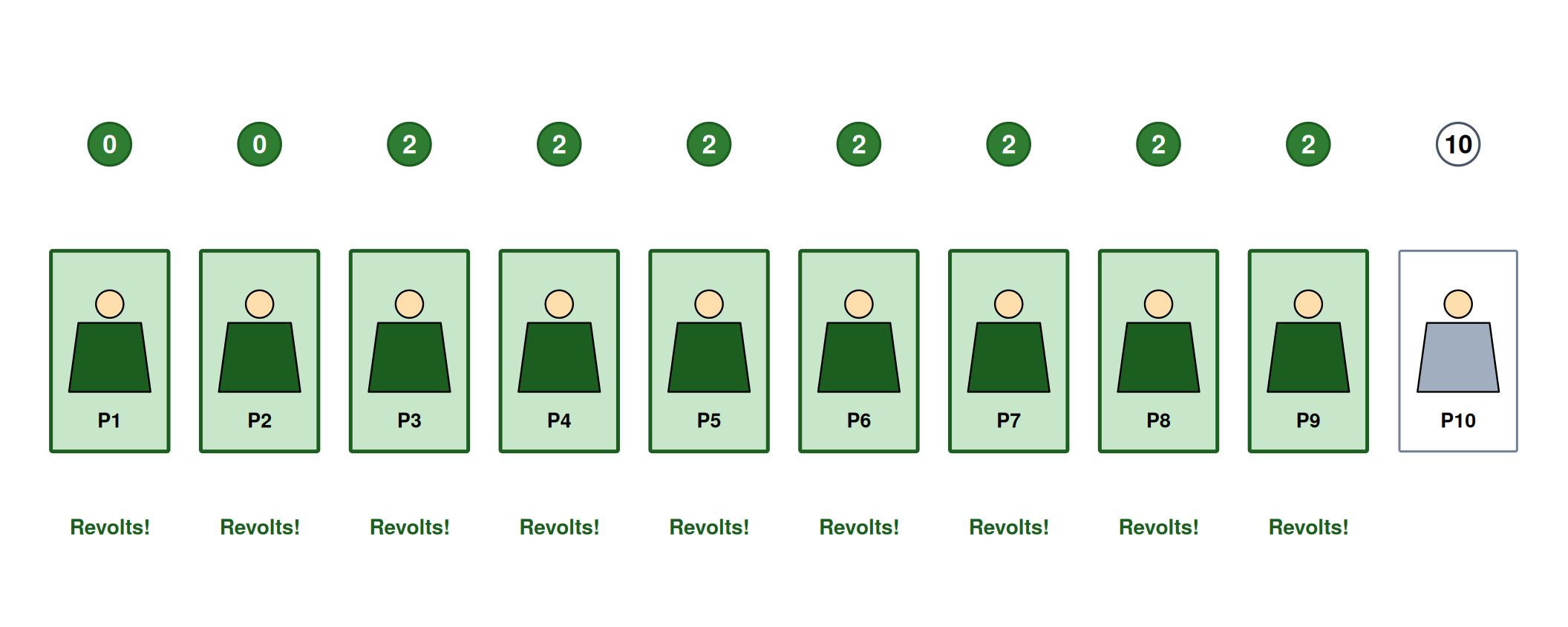
  • Person 1 (\(T = 0\)) and Person 2 (\(T = 0\)) both protest, other 7 join
  • 9/10 people revolt \(\rightarrow\) Revolutionary cascade

Implications of the Theory

  • Discontent can be widespread, yet revolutions do not happen

  • Catalyzing events can make people more willing to protest triggering a cascade

  • East Germany: USSR position likely signalled violent repression was less likely

  • Arab Spring: A street vendor’s self-immolation started the revolts

Mohamed Bouazizi’s suicide in 2010 catalyzed the Arab Spring

Top-Down Transitions

Poland 1989

  • Economic crisis leads to demand for “liberal” reforms

  • 1980: Polish Communist Party allows the formation of independent trade union Solidarity

  • Solidarity gains 10 million members in a few months

  • Initial wave of repression but protests continue

  • 1989: Government seeks compromise with Solidarity, grants first elections

  • Solidarity wins all “contestable” seats, first non-Communist Prime Minister appointed
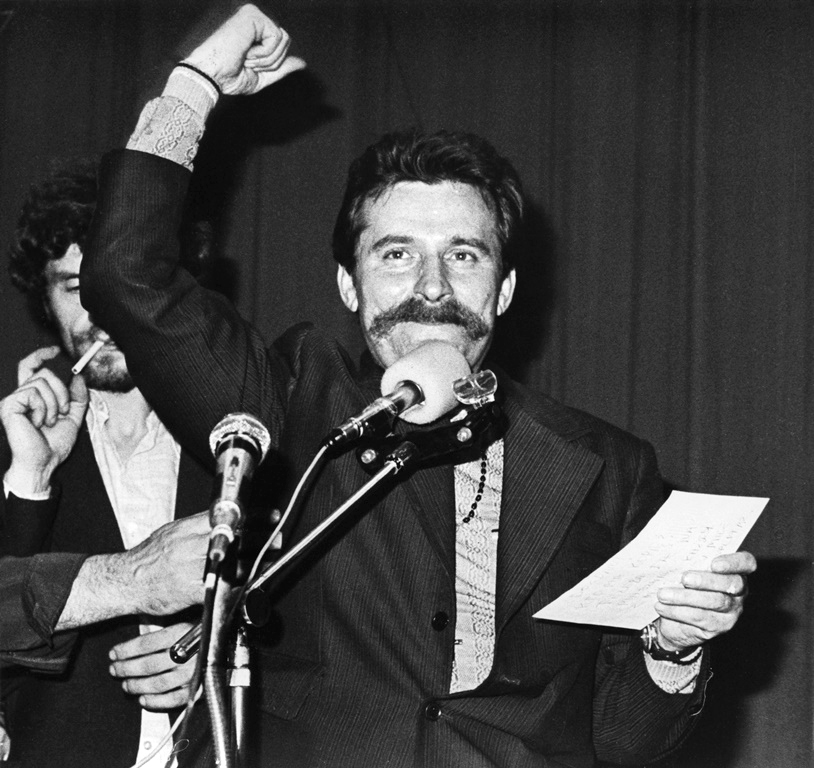
Lech Wałęsa (Giedymin Jabłoński/Wikimedia Commons)

A Strategic Theory of Transition: Foundations and Logic

Top-down transition \(\rightarrow\) liberalizing reforms lead to democratization

Key idea: the government does not want to democratize

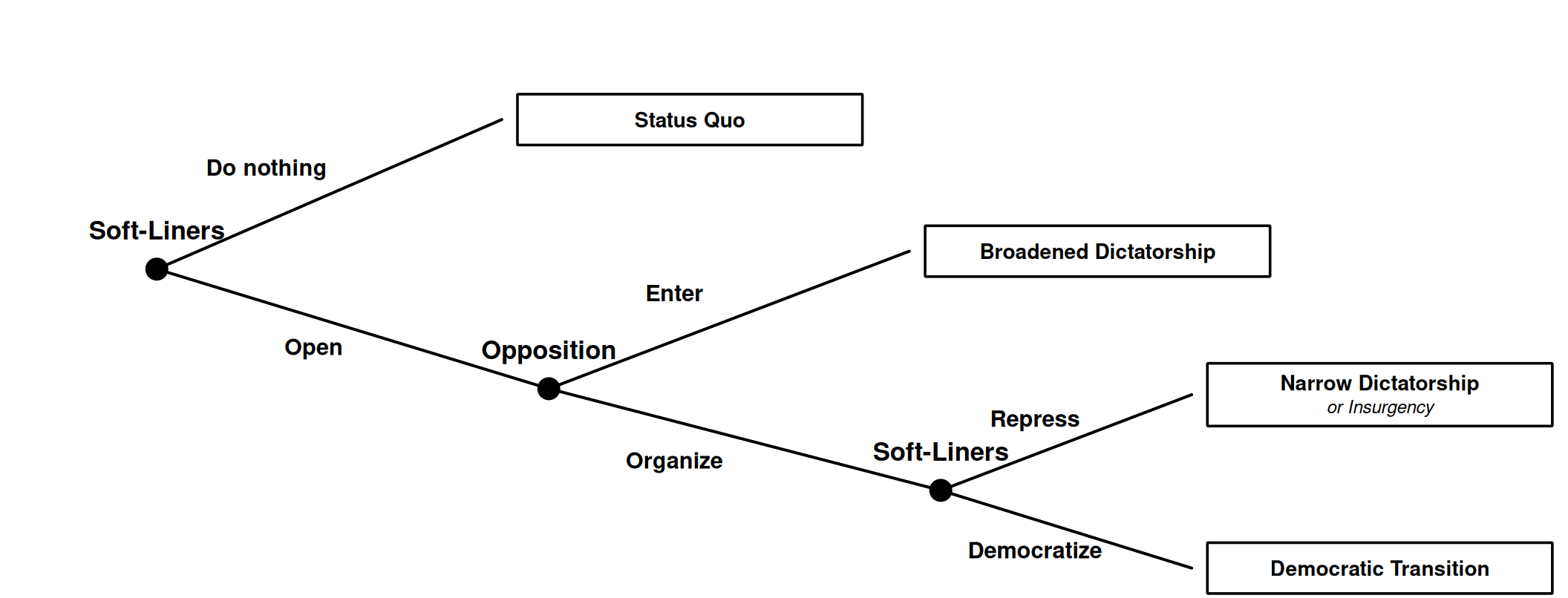
  • Moderate factions (“soft-liners”) \(\rightarrow\) support liberal reforms (e.g., freedom of association) to “co-opt” the opposition
  • Opposition \(\rightarrow\) wants to use the reforms to further challenge the government’s power
  • Knowing this, soft-liners are reluctant to do any reform
  • Democratization is the result of miscalculation of the government

Transition Game

Strategic interaction: anticipate the future actions of the opponent

We analyze what happens in two cases:

  1. Weak opposition (does not have support)
  2. Strong opposition (has mass support)

Transition Game: Weak Opposition
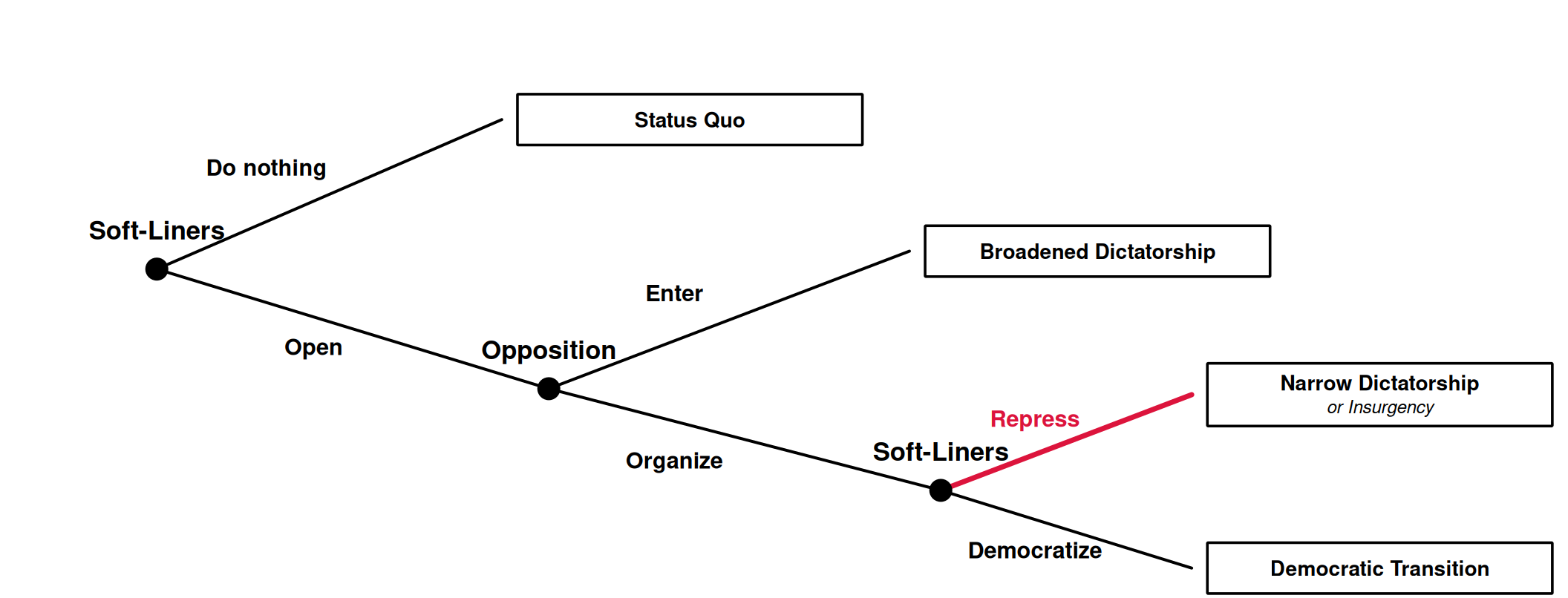
  • Stage 3 (Soft-Liners): Facing a weak opposition, soft-liners prefer to Repress rather than democratize

Transition Game: Weak Opposition
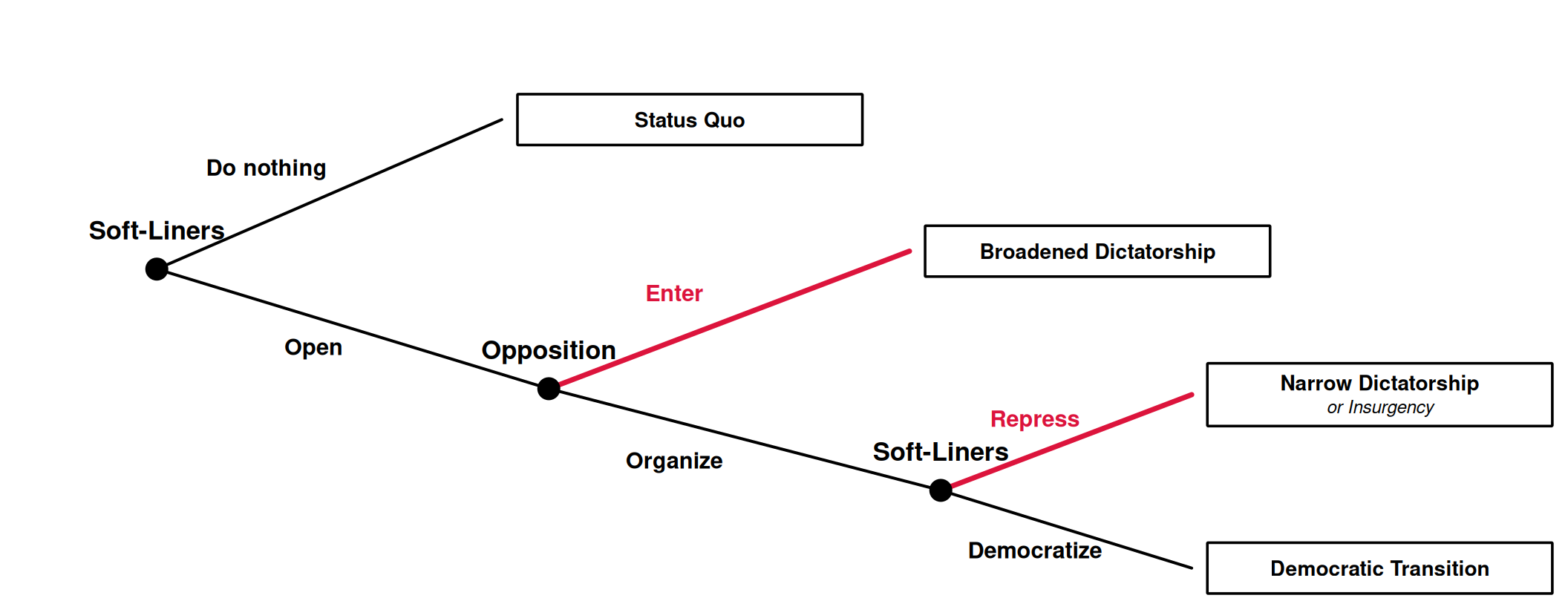
  • Stage 3 (Soft-Liners): Soft-liners will Repress
  • Stage 2 (Opposition): Anticipating repression, the opposition decides to Enter rather than organize

Transition Game: Weak Opposition
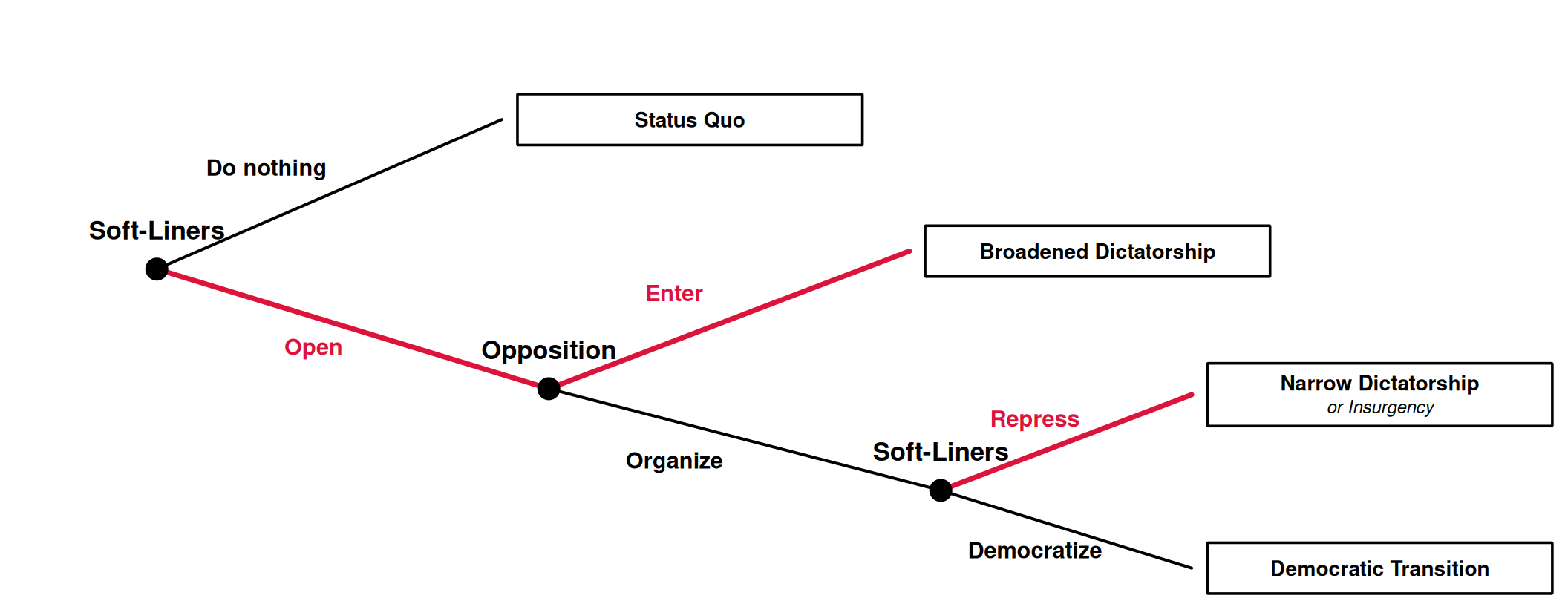
  • Stage 3 (Soft-Liners): Soft-liners will Repress
  • Stage 2 (Opposition): Opposition will Enter
  • Stage 1 (Soft-Liners): Knowing the opposition will enter, soft-liners choose to Open

Transition Game: Weak Opposition
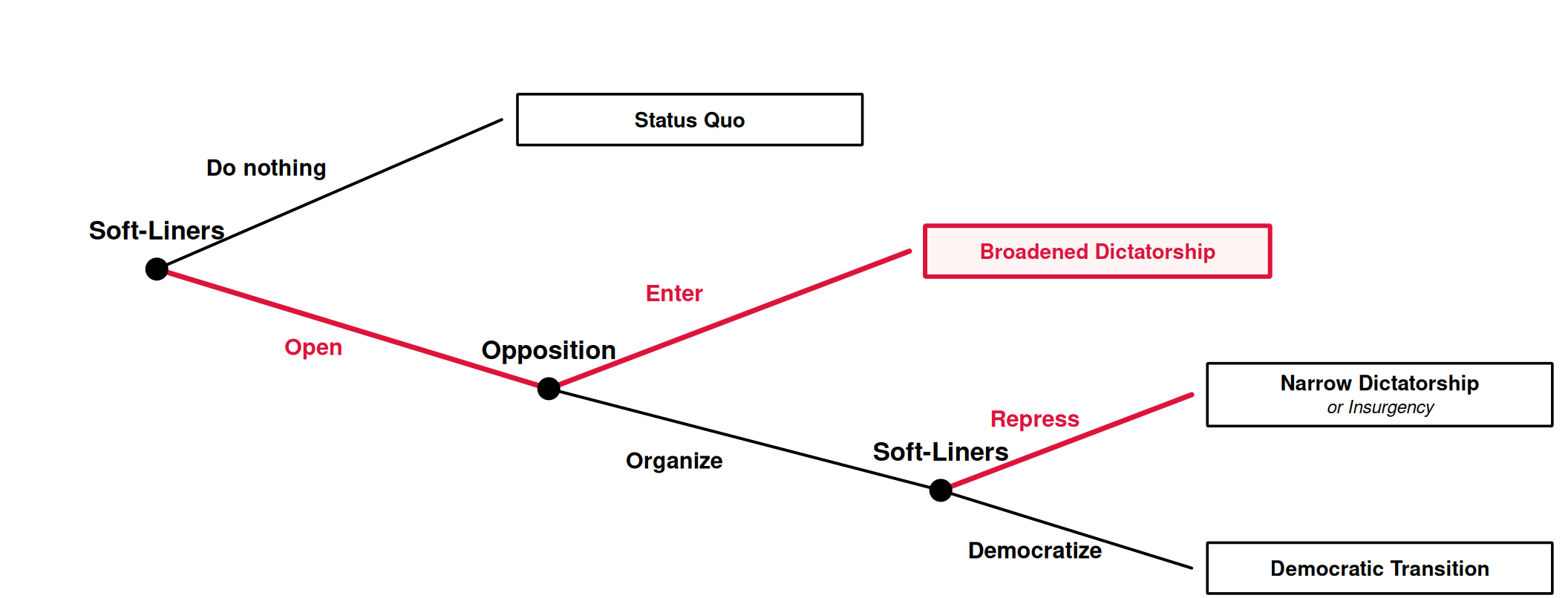
  • Equilibrium Path: Soft-Liners Open \(\rightarrow\) Opposition Enters
  • Outcome: Broadened Dictatorship (liberalization without democratization)

Transition Game: Strong Opposition
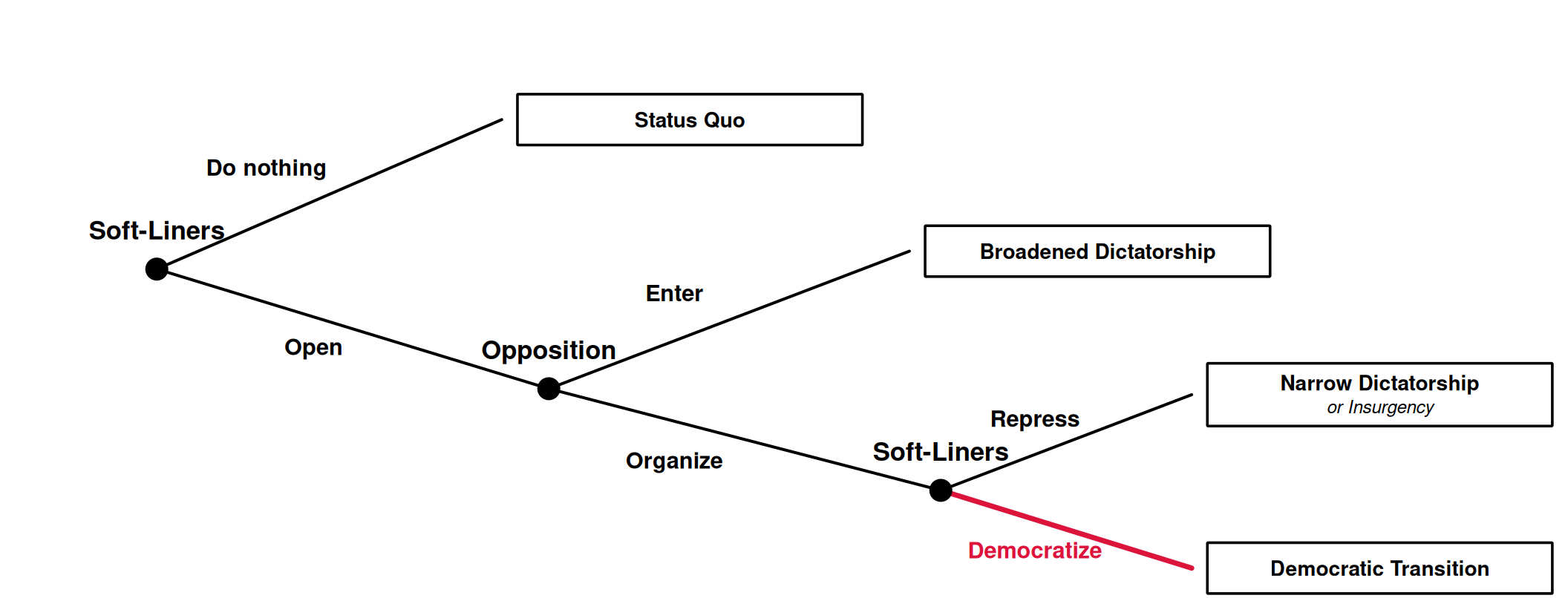
  • Stage 3 (Soft-Liners): Repression fails against strong opposition \(\implies\) soft-liners must Democratize

Transition Game: Strong Opposition
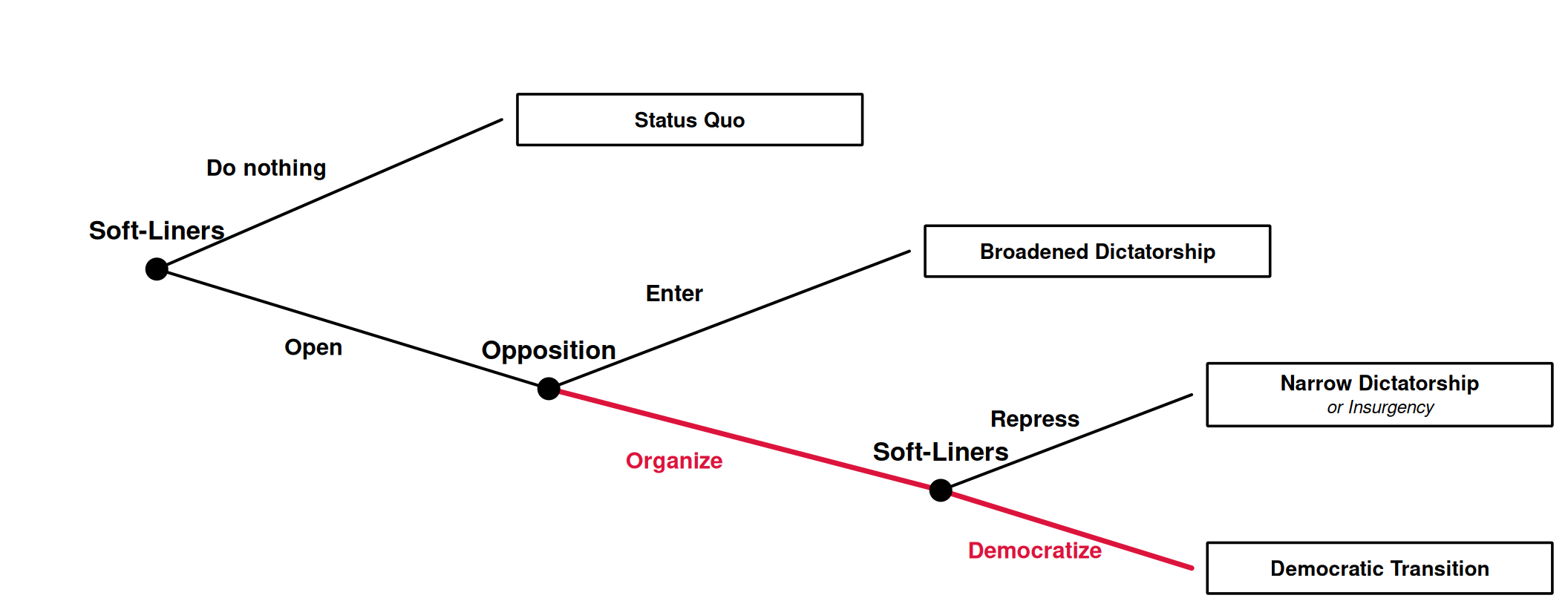
  • Stage 3 (Soft-Liners): Soft-liners will Democratize
  • Stage 2 (Opposition): Anticipating democratization, the opposition chooses to Organize

Transition Game: Strong Opposition
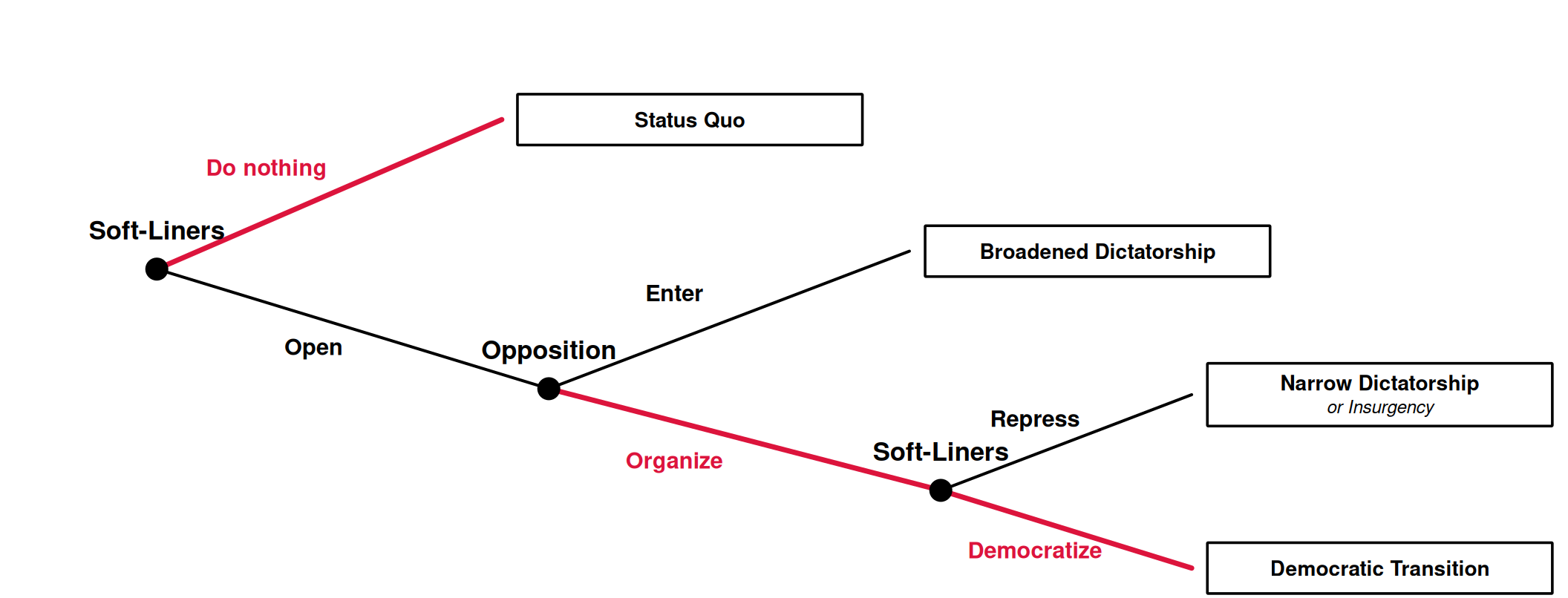
  • Stage 3 (Soft-Liners): Soft-liners will Democratize
  • Stage 2 (Opposition): Opposition will Organize
  • Stage 1 (Soft-Liners): Knowing opening triggers democratization, soft-liners choose to Do nothing

Transition Game: Strong Opposition
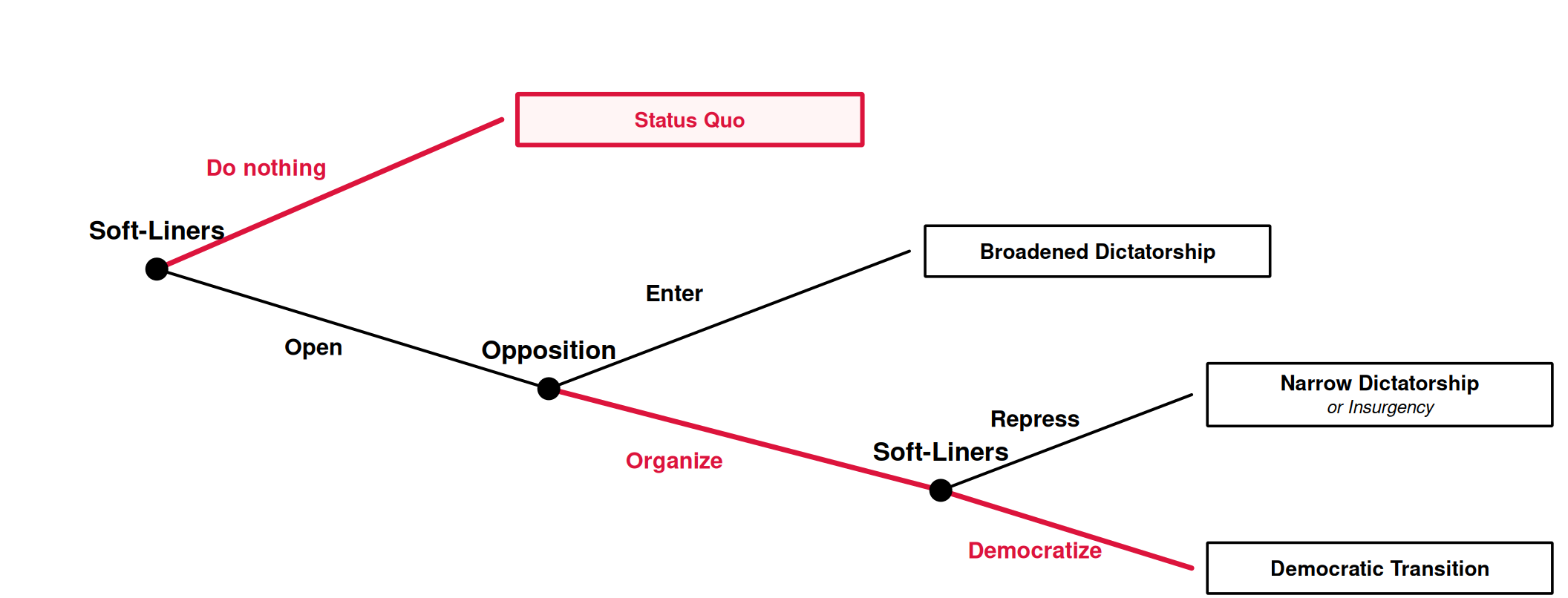
  • Equilibrium Path: Soft-Liners Do nothing
  • Outcome: Status Quo (democratization never happens)

Democratic Transition by Mistake
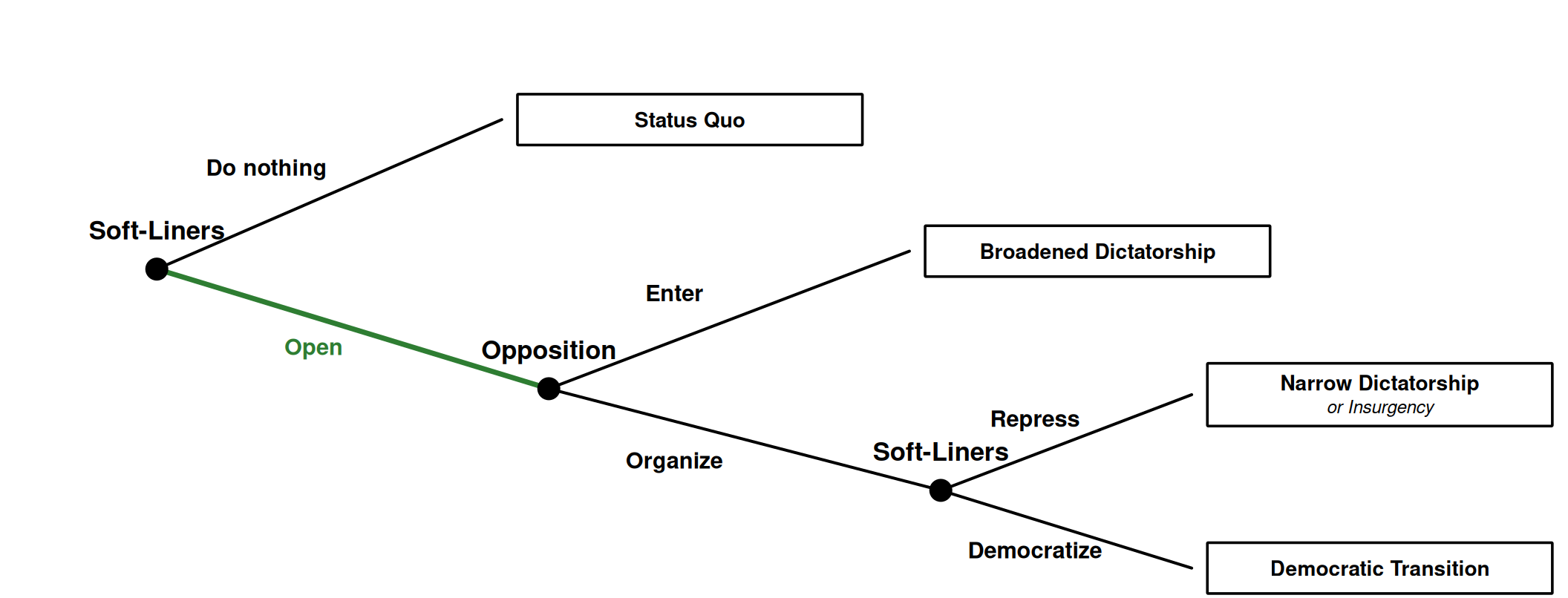
  • Soft-liners mistakenly believe the opposition is weak (and will Enter)
  • Stage 1 (Soft-Liners): Based on miscalculation, soft-liners Open

Democratic Transition by Mistake
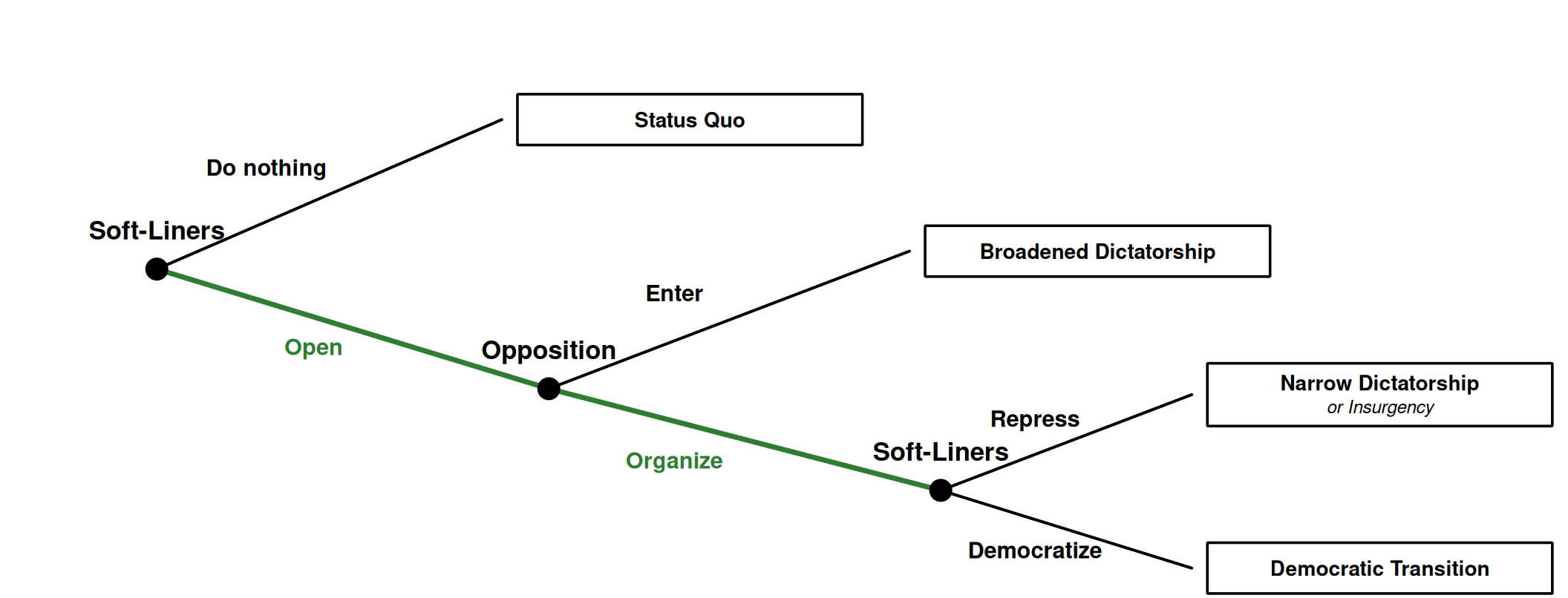
  • Stage 1: Soft-liners Open (expecting opposition to enter)
  • Stage 2 (Opposition): But the opposition is actually strong and chooses to Organize

Democratic Transition by Mistake
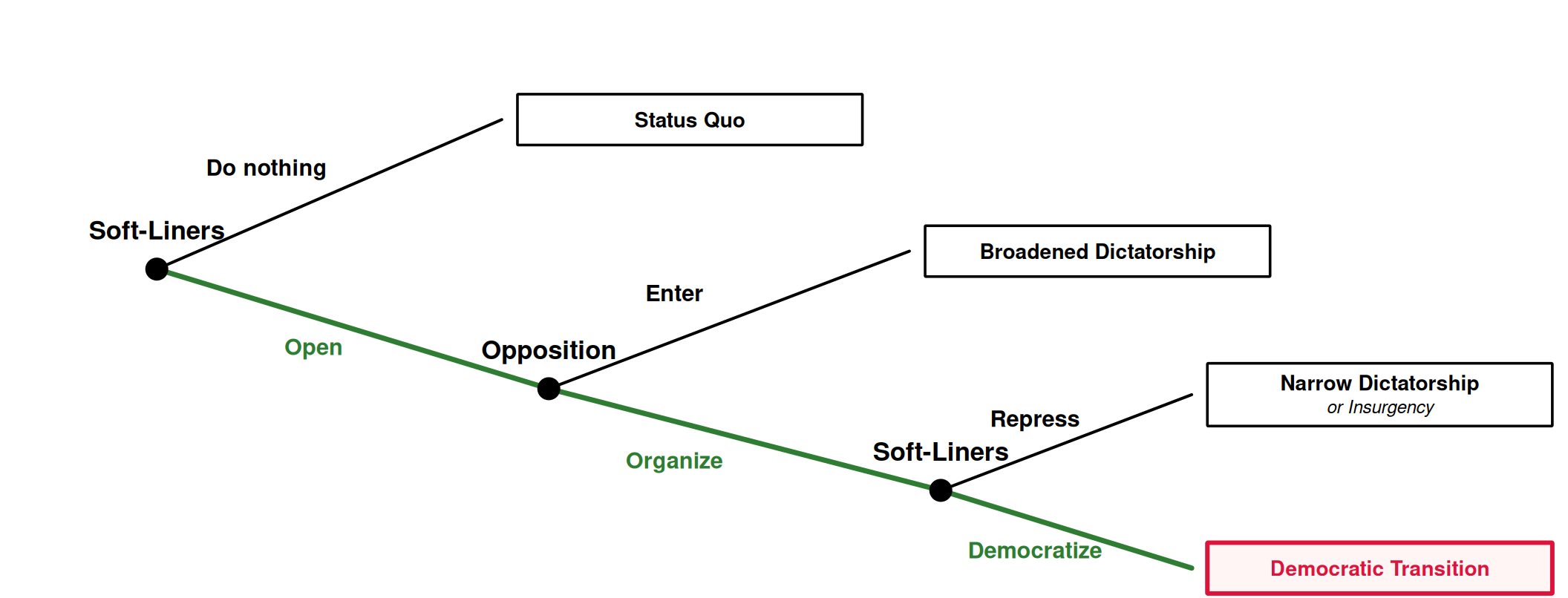
  • Stage 1: Soft-liners Open (mistaken belief that opposition is weak)
  • Stage 2: Opposition Organizes (revealing true strength)
  • Stage 3 (Soft-Liners): Realize mistake, forced to Democratize
  • Outcome: Democratic Transition occurs by mistake

Explaining Poland’s Transition

  • Polish Communist Party underestimated Solidarity’s support

  • People were reluctant to share their true opinions

  • Government hoped to incorporate Solidarity in the puppet opposition

  • Solidarity pushed for democratization backed by the masses

  • The USSR’s no-interference position strengthened the opposition vis-a-vis the government

Summing Up

What We Learned

  • Democratic transition requires many decisions

  • Decisions are taken under fundamental uncertainty

    • People aspire to democracy but are uncertain about others’ resolve
    • Authoritarian regimes want to keep power but are uncertain about the opposition’s strength
  • These problems are exacerbated by people hiding their opinions

  • This may lead to errors of judgement

    • Protests don’t happen even though discontent is large
    • Regimes liberalize to co-opt opposition and end up emboldening it
  • Regime transitions can happen suddenly and unexpectedly

Discussion

These theories are not perfect

  • Remember the analogy between maps and models

  • They isolate important mechanisms (coordination/concession)

    • Emphasize agency of the people vs the government
  • Transitions have both “top-down” and “bottom-up” components

    • See the paper discussed this week

Implications for how dictatorships work

  • “Democratic” reforms can actually strengthen a regime
  • Next week we will see why

Thank you!